
Introduction
Speed is key when it comes to developing a business. There are situations where you simply cannot afford to hire engineers and spend months coding your idea. This is where low-code platforms can come in handy.
This manual aims at helping you choose low-code platforms that will work for your business in 2026 and find the best option depending on what kind of software you intend to develop.
What Is a Low-Code Platform? And Why Do Startups Like It?
In low-code platforms, one develops applications through a graphical user interface by dragging and dropping pieces without writing much code.
Benefits that make startups favor low-code platforms include:
- Faster time to market
- Lower development costs
- Easy iteration and updates
- Non-developers can contribute
Simply put, developing software like assembling lego.
Top Low-Code Platforms for Startups in 2026
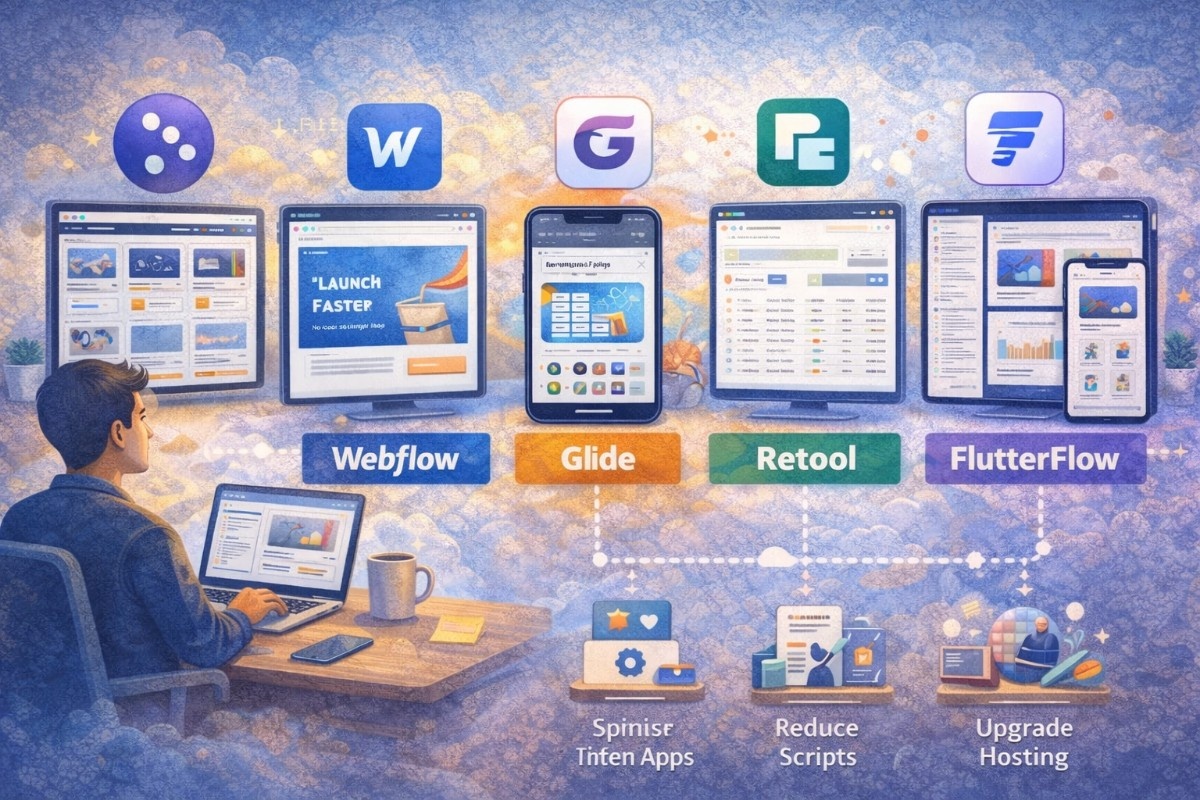
Let’s break down some of the most practical tools being used right now.
1. Bubble – Best for Full Web Apps Without Coding
One of the best platforms for creating full web apps without any coding is Bubble.
Reasons to select Bubble:
- Drag-and-drop interface
- Built-in database
- Workflow support
Example Use Case:
👉 Building a marketplace MVP (like a mini Airbnb or Fiverr)
Example Workflow:
- User signs up
- Data stored in Bubble database
- Dashboard updates automatically
2. Webflow – Best for Design + CMS
If your focus is on design and content-driven websites, Webflow is a solid choice.
Why choose Webflow:
- Pixel-perfect design control
- Built-in CMS
- Hosting included
Example:
<!-- Exported Webflow structure -->
<div class="hero-section">
  <h1>Launch Faster</h1>
  <p>No-code your startup idea</p>
</div>
Best for:
- Marketing websites
- Landing pages
- Content platforms
3. Glide – Best for Mobile Apps from Sheets
Glide lets you turn Google Sheets into fully functional mobile apps.
Why choose Glide:
- Super beginner-friendly
- Fast setup
- Real-time data sync
Example Use Case:
👉 Internal tool for tracking inventory or customers
4. Retool – Best for Internal Tools
Retool is widely used by startups to build dashboards and admin panels quickly.
Why choose Retool:
- Connects to databases/APIs
- Drag-and-drop UI builder
- Powerful logic handling
Example:
// Simple API query in Retool
fetch('/api/users')
  .then(res => res.json())
  .then(data => console.log(data));
Best for:
- Admin dashboards
- Data management tools
- Internal workflows
5. FlutterFlow – Best for Cross-Platform Apps
FlutterFlow is gaining popularity for building mobile apps using Flutter without deep coding.
Why choose FlutterFlow:
- Cross-platform (iOS + Android)
- Visual UI builder
- Exportable code
Example Use Case:
👉 Startup building a mobile app MVP quickly
How to Choose the Right Platform (Step-by-Step)
Step 1: Define What You’re Building
- Web app → Bubble
- Website → Webflow
- Mobile app → Glide / FlutterFlow
- Internal tool → Retool
Step 2: Consider Your Team
- Non-tech founders → Glide / Bubble
- Designers → Webflow
- Developers → Retool / FlutterFlow
Step 3: Think About Scalability
- MVP stage → Any tool works
- Growth stage → Choose platforms with export/customization options
Real-World Insight
A lot of startups don’t stick with low-code forever—and that’s okay.
👉 Common pattern:
- Build MVP using low-code
- Validate idea
- Rebuild with full-stack later
Low-code isn’t a shortcut—it’s a strategy for speed.
When Low-Code Might Not Be the Best Choice
- Highly complex systems
- Real-time heavy applications
- Deep backend logic requirements
In these cases, traditional development still wins.
Summary
Low-code platforms are changing how startups build products. Instead of waiting months, you can launch in weeks—and sometimes days.
Quick recap:
- Bubble → Full web apps
- Webflow → Design + content
- Glide → Simple mobile apps
- Retool → Internal tools
- FlutterFlow → Cross-platform apps
What Should You Do Next? (CTA)
Don’t spend weeks researching—start building.
Pick one platform from this list and:
- Create a simple MVP (even a basic version)
- Test it with real users
- Gather feedback and improve
Your first version doesn’t need to be perfect—it just needs to exist.