
Introduction
Choosing between SQL and NoSQL databases is one of the most important decisions when building an application. The right choice impacts performance, scalability, development speed, and even long-term maintenance.
SQL databases have been around for decades and are known for reliability and structured data handling. On the other hand, NoSQL databases offer flexibility and scalability for modern, high-performance applications. Understanding when to use each can help you build efficient and future-proof systems.
What is SQL?
SQL (Structured Query Language) databases are relational databases that store data in tables with predefined schemas.
Key characteristics:
- Structured data (rows and columns)
- Fixed schema
- Strong consistency (ACID compliance)
- Uses SQL for queries
Popular SQL databases:
- MySQL
- PostgreSQL
- Microsoft SQL Server
- Oracle Database
What is NoSQL?
NoSQL databases are non-relational databases designed for flexibility, scalability, and handling large volumes of unstructured or semi-structured data.
Types of NoSQL databases:
- Document-based (MongoDB)
- Key-value (Redis)
- Column-family (Cassandra)
- Graph (Neo4j)
Key characteristics:
- Flexible schema
- Horizontal scalability
- High performance for large datasets
- Designed for distributed systems
Key Differences Between SQL and NoSQL
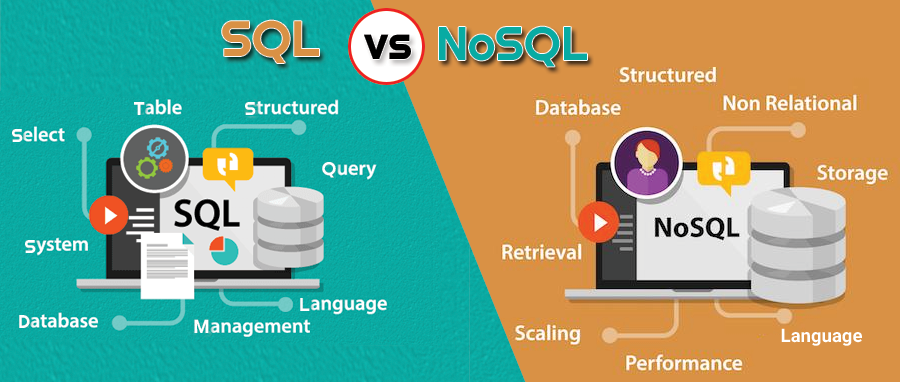
| Feature | SQL | NoSQL |
|---|---|---|
| Data Structure | Tables (rows & columns) | JSON, key-value, graph, etc. |
| Schema | Fixed | Dynamic |
| Scalability | Vertical | Horizontal |
| Transactions | Strong (ACID) | Eventual consistency (BASE) |
| Best For | Structured data | Unstructured data |
When to Use SQL
SQL databases are ideal when your application requires structured data and strong consistency.
1. Financial Systems
Applications like banking, payment gateways, and accounting systems need precise transactions.
Example:
A fintech app handling money transfers must ensure that transactions are completed accurately without data loss.
2. E-commerce Platforms
Order management, inventory, and customer data often require relational structure.
Example:
An online store storing users, orders, and products with relationships between them.
3. CRM & ERP Systems
Business applications with structured workflows and reporting.
Example:
Customer relationship management tools with organized data and analytics.
4. Applications with Complex Queries
If your app requires joins, aggregations, and reporting, SQL is a better choice.
When to Use NoSQL
NoSQL databases are best when flexibility, speed, and scalability are priorities.
1. Real-Time Applications
Apps that need fast data access and updates.
Example:
Chat applications storing messages and user activity.
2. Big Data & Analytics
Handling massive volumes of data from multiple sources.
Example:
Analytics platforms collecting user behavior data.
3. Content Management Systems
Dynamic content with changing structures.
Example:
Blogs or news platforms storing articles in JSON format.
4. IoT Applications
Devices generating continuous streams of data.
Example:
Smart home systems collecting sensor data.
5. Social Media Platforms
Handling high traffic and unstructured data.
Example:
User posts, likes, comments, and interactions.
Real Project Examples
Example 1: E-commerce Website
- SQL: Store users, orders, payments (structured & relational)
- NoSQL: Store product catalogs, reviews, and session data
Hybrid approach ensures both consistency and scalability.
Example 2: Chat Application
- NoSQL: Store messages for fast read/write operations
- SQL: Store user profiles and authentication data
Example 3: Banking Application
- SQL only: Ensures strict consistency and transaction reliability
Example 4: Social Media Platform
- NoSQL: Handle massive user-generated content
- SQL: Manage relationships like followers and user accounts
SQL vs NoSQL: Which One Should You Choose?
Choose SQL if:
- Your data is structured
- You need strong consistency
- Your application involves complex queries
- Data relationships are important
Choose NoSQL if:
- Your data is unstructured or rapidly changing
- You need high scalability
- You are building real-time applications
- Speed and flexibility are priorities