
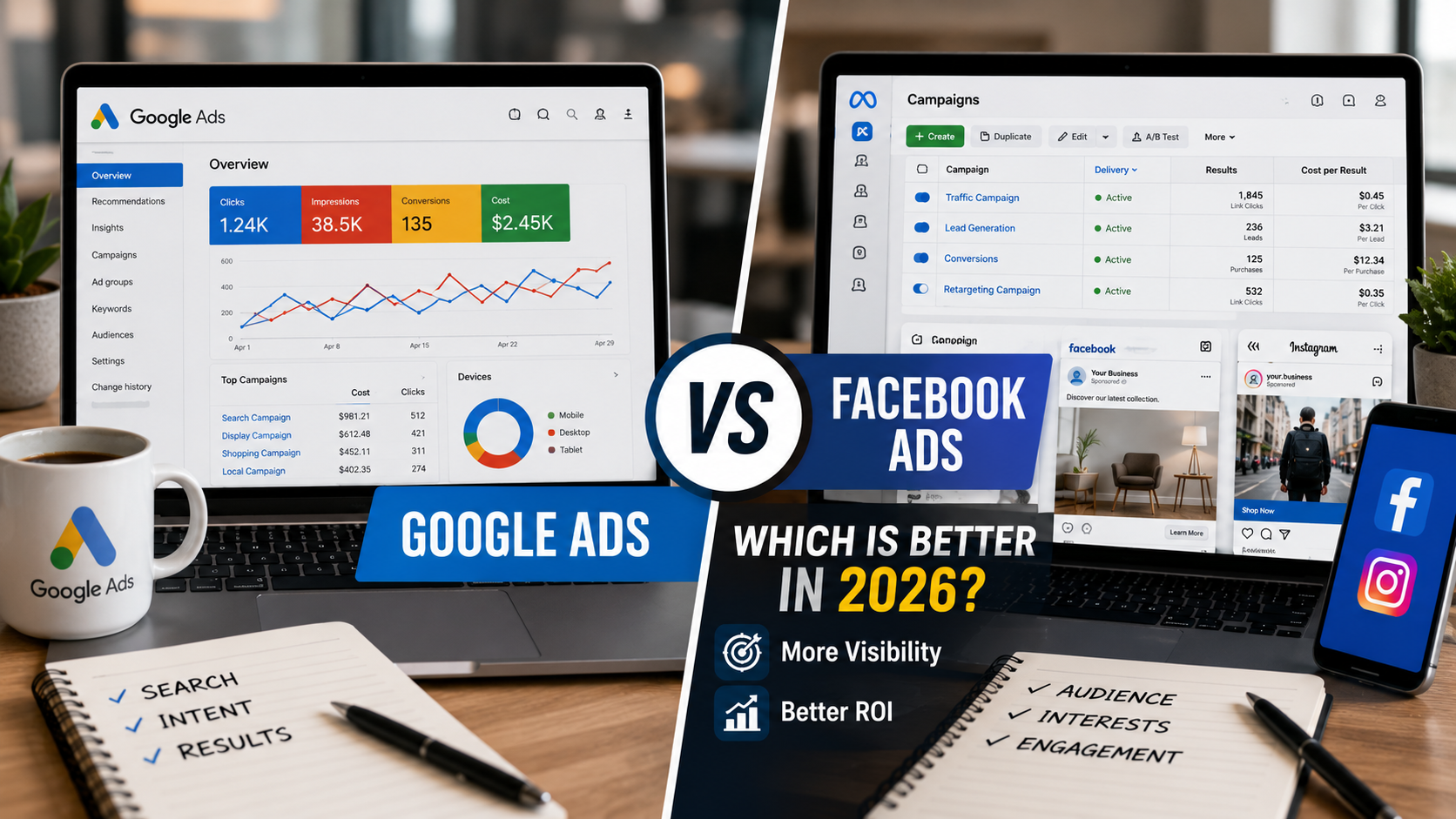
Digital advertising continues evolving rapidly in 2026, and businesses now have more opportunities than ever to reach customers online. Two of the biggest online advertising platforms are Google Ads and Facebook Ads. Both platforms can generate leads, traffic, and sales, but they work very differently.
Many business owners ask:
- Which platform delivers better results?
- Is Google Ads better for local services?
- Are Facebook Ads cheaper?
- Which platform gives better ROI in 2026?
The truth is that both platforms can be powerful when used correctly. However, the best choice depends on your business goals, target audience, budget, and marketing strategy.
This guide explains the key differences between Google Ads and Facebook Ads, including costs, targeting, advantages, and which platform may work better for your business in 2026.
What Is Google Ads?

Google Ads is Google’s online advertising platform where businesses pay to appear in:
- Google search results
- YouTube
- Google Maps
- partner websites
- shopping listings
Google Ads mainly focuses on search intent. This means users are already searching for products or services when they see ads.
Google Ads helps businesses appear when customers are actively looking for solutions.
What Are Facebook Ads?
Facebook Ads includes advertising across:
- Messenger
- Meta Audience Network
Unlike Google Ads, Facebook Ads focus more on audience targeting and user interests instead of search intent.
Businesses can target users based on:
- age
- location
- interests
- behavior
- online activity
- demographics
Facebook Ads are often used for:
- brand awareness
- social engagement
- retargeting
- visual promotions
- product discovery
Main Difference Between Google Ads and Facebook Ads
The biggest difference is:
Google Ads capture demand
while
Facebook Ads create demand
Google Ads = Intent-Based Marketing
People already search for services.
Example:
24/7 Emergency Hospitals
The user needs help immediately.
This makes Google Ads highly effective for:
- emergency services
- local businesses
- high-intent leads
Facebook Ads = Discovery Marketing
Users are browsing social media, not actively searching.
Facebook Ads interrupt attention using:
- visuals
- videos
- promotions
- offers
This works well for:
- ecommerce
- lifestyle brands
- awareness campaigns
- remarketing
Which Platform Is Better for Lead Generation?
Google Ads Usually Wins for High-Intent Leads
Google users already want solutions.
This often produces:
- faster conversions
- higher-quality leads
- emergency calls
- direct inquiries
Industries that benefit strongly include:
- restoration services
- legal services
- HVAC
- plumbing
- healthcare
- home services
Facebook Ads for Lead Generation
Facebook Ads can still generate leads effectively, especially when:
- using strong visuals
- offering promotions
- retargeting website visitors
- building brand awareness
However, conversion intent is usually lower compared to Google search traffic.
Which Platform Is More Affordable?
Facebook Ads Often Cost Less Per Click
Facebook Ads generally have:
- lower CPC
- lower CPM
- broader audience reach
Small businesses with limited budgets often start with Facebook Ads.
Google Ads Can Be More Expensive
Competitive industries may have higher costs.
Examples:
- lawyers
- restoration companies
- insurance
- finance
- healthcare
However, Google Ads often produce higher conversion quality because users already have buying intent.
Which Platform Has Better Targeting?

Facebook Ads Offer Advanced Audience Targeting
Facebook and Instagram provide powerful demographic targeting options.
Businesses can target:
- interests
- hobbies
- job titles
- relationship status
- shopping behavior
- lookalike audiences
This makes Facebook ideal for:
- brand building
- audience expansion
- social engagement
Google Ads Focus on Keywords & Intent
Google targeting revolves around:
- search terms
- location
- device
- audience signals
- browsing behavior
Google excels when users actively search for services or products.
Which Platform Is Better for Local Businesses?
Google Ads Usually Perform Better for Local Services
Local service businesses often see better ROI from Google Ads because customers search with urgency.
Google Maps visibility also increases local lead opportunities.
Facebook Ads for Local Awareness
Facebook Ads still help local businesses by:
- promoting offers
- increasing visibility
- retargeting local audiences
- sharing before-and-after projects
The best strategy often combines both platforms.
Google Ads vs Facebook Ads for Ecommerce
Facebook & Instagram Ads Work Very Well for Ecommerce
Visual products perform strongly on:
- Reels
- Stories
Fashion, beauty, fitness, and lifestyle brands often benefit from visual advertising.
Google Shopping Ads Also Matter
Google Shopping Ads help users compare products directly in search results.
Many ecommerce brands use:
- Google Shopping
- Performance Max campaigns
- remarketing ads
for higher purchase intent traffic.
Which Platform Is Better for Brand Awareness?
Facebook Ads Usually Win for Awareness Campaigns
Social media ads help businesses:
- increase visibility
- grow followers
- generate engagement
- build community
Video content and visual creatives perform especially well.
Which Platform Has Better ROI in 2026?
The answer depends on business type and campaign goals.
Google Ads Usually Deliver Better ROI For:
- local services
- emergency services
- high-intent industries
- direct lead generation
- immediate conversions
Facebook Ads Usually Deliver Better ROI For:
- ecommerce
- visual products
- audience building
- remarketing
- social engagement
Current Advertising Trends in 2026
Digital advertising continues changing rapidly.
AI-Powered Campaign Optimization
Both Google and Meta now use AI heavily for:
- bidding
- targeting
- audience prediction
- campaign automation
Businesses should still monitor campaigns manually for best performance.
Video Advertising Dominates
Short-form videos now outperform many static ads.
Popular formats include:
- Instagram Reels
- YouTube Shorts
- Facebook video ads
Privacy Changes Affect Tracking
Privacy regulations continue reducing third-party tracking data.
Businesses now focus more on:
- first-party data
- email lists
- customer retention
- remarketing audiences
Omnichannel Marketing Is Growing
Many successful businesses combine:
- SEO
- Google Ads
- Facebook Ads
- email marketing
- social media
instead of relying on one platform only.
Should Small Businesses Use Google Ads or Facebook Ads?
For many small businesses:
Google Ads are better for immediate leads
while
Facebook Ads are better for awareness and remarketing
A combined strategy often produces the strongest long-term results.
Example:
- Google Ads capture active searches
- Facebook Ads retarget visitors later
This improves conversions and brand visibility.
Both Google Ads and Facebook Ads remain highly effective marketing platforms in 2026, but they serve different purposes.
Google Ads work best for businesses targeting high-intent searches and direct lead generation. Facebook Ads excel at audience targeting, visual engagement, and brand awareness.
Choosing the right platform depends on:
- business goals
- industry
- budget
- audience behavior
- marketing strategy
For many businesses, using both platforms together creates the strongest digital marketing strategy and helps maximize long-term online growth.