
Every website needs basic knowledge about search engine optimization (SEO) because this knowledge helps them achieve online visibility which attracts organic visitors. On-page SEO functions as a vital SEO component that determines the way search engines assess and rank your website content. But what exactly is on-page SEO, and why does it matter? The complete guide about on-page SEO reveals its primary components which show its value and provide methods to enhance web page performance through optimization.
Defining On-Page SEO: The Foundation of Search Visibility
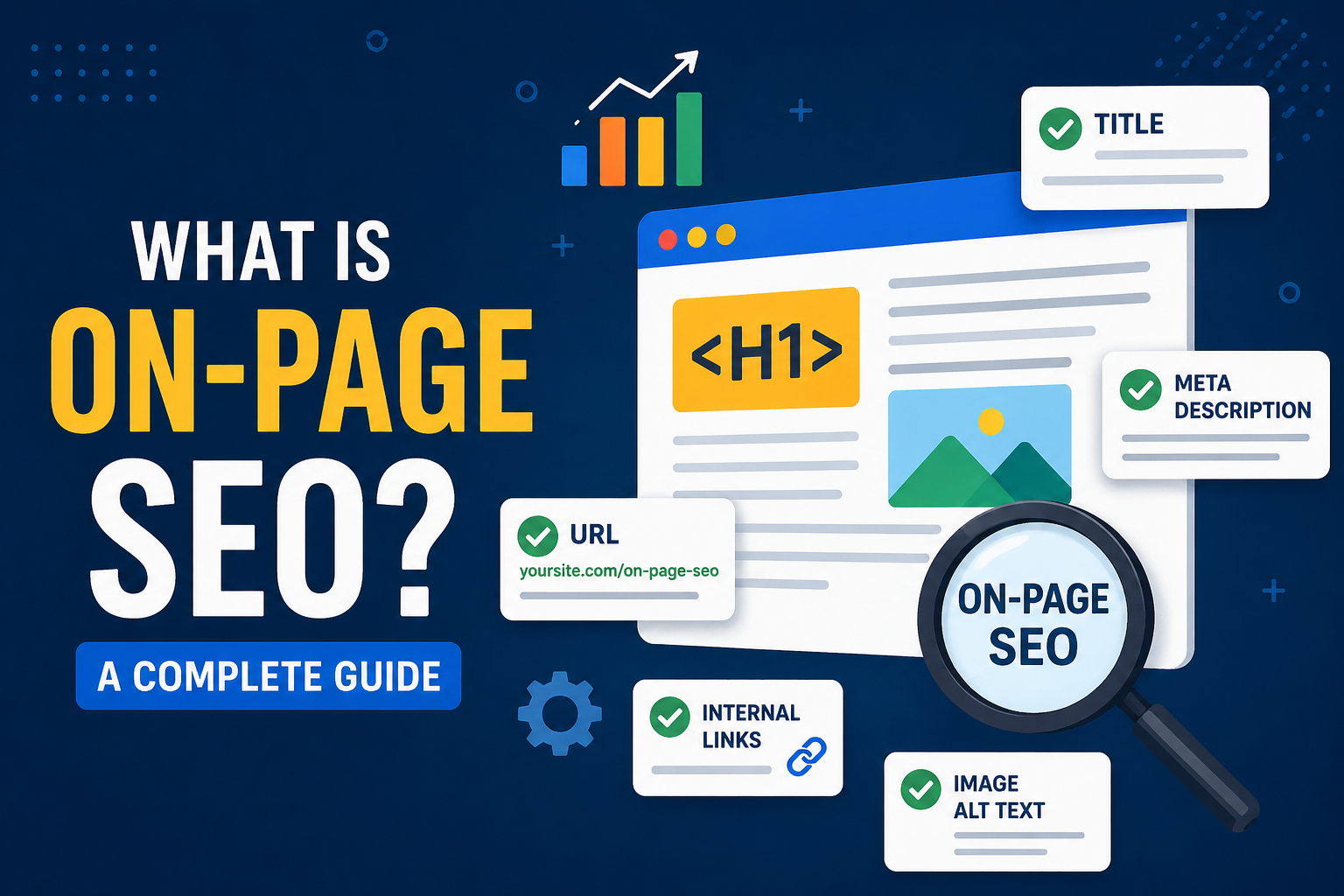
On-page SEO describes the process which web pages use to enhance their search engine results page SERP positioning while drawing in specific visitors to their site. On-page SEO allows website owners to manage all aspects of their website whereas off-page SEO requires external elements to function properly through backlinks. The system includes everything which includes content quality matching keyword placement together with HTML tags and user experience aspects. Proper implementation enables search engines to grasp your page content for better ranking results. This primary SEO element forms the fundamental structure which supports all successful online marketing activities. Website owners and marketers can achieve better content performance through effective on-page SEO understanding.
Keyword Optimization: Targeting the Right Search Terms
Keyword optimization stands as the essential foundation which supports all on-page SEO initiatives. The process involves discovering search terms which matter to your audience and using them throughout your content in a way that sounds natural. The placement of keywords helps search engines identify your page’s subject matter to match it with user search terms. Keyword optimization needs proper balance because excessive keyword usage will reduce readability and result in penalties while insufficient usage will decrease visibility. You need to distribute primary keywords throughout your content by placing them in essential areas like titles and headings and meta descriptions and URL slugs and body text while keeping the writing style natural. Conducting keyword strategy updates according to current trends and algorithm modifications helps your content maintain its competitive edge. When you do keyword optimization effectively, it increases your chances of showing up to users who are currently interested in your products.
Perform keyword research through Google Keyword Planner and SEMrush to obtain complete results.
Primary keywords must be added to titles and headers and meta descriptions.
Long-tail keywords should be used to achieve specific traffic goals.
The content should remain readable; therefore, keyword stuffing must be avoided.
Keywords should be checked at regular intervals to assess performance before making updates.
Content Quality: Creating Valuable and Engaging Material
Content remains king in the realm of on-page SEO because high-quality content directly influences user engagement and search rankings. Search engines prefer content which brings actual value by completely answering questions together with providing insights and solving problems for users. Well-crafted content also encourages longer dwell time and lower bounce rates—factors that signal relevance to search engines. Effective on-page SEO needs all relevant details together with easy-to-understand information and proper formatting and multimedia materials which include images and videos for necessary situations. Unique content that distinguishes your site from others will boost your site’s authority and trustworthiness for both users and search engines. Creating useful content on a regular basis will develop a dedicated audience base which will enhance organic visibility throughout time.
Focus on creating comprehensive articles that cover topics in-depth.
Headings and subheadings must be clear to help users navigate the content.
Images and videos should be used to create multimedia elements which make the content more engaging.
The content must remain original by steering clear of any duplicate material.
Existing pages need to be updated with new content at regular intervals to keep their current relevance.
Meta Tags Optimization: Enhancing Click-Through Rates
Meta tags are snippets of code embedded within HTML that provide information about a webpage to search engines and users alike. Proper meta tag optimization requires proper handling of both meta titles and meta descriptions to create effective click-through paths from search engine results pages (SERPs) to websites. A well-crafted meta title should be concise yet descriptive, incorporating target keywords naturally while enticing users to click through. Meta descriptions need to match the title by giving clear page content summary through 150-160 character length description. Your tags determine how your listing shows up in search results which directly impacts click-through rate (CTR). Effective meta tags serve as virtual storefronts which attract customers who want to compare products from multiple businesses while enhancing overall page efficiency.
Write unique meta titles for each page containing primary keywords.Develop meta descriptions which effectively describe page content through engaging language.The use of action-oriented language can motivate users to click on links.The title length should stay below 60 characters while the description limit should reach 160 characters. Brand names and unique selling propositions must be included in appropriate situations.
URL Structure: Simplifying Navigation for Users & Search Engines
A clean URL structure is an often-overlooked component of on-page SEO but plays a vital role in user experience and crawlability. Clear URLs help visitors understand what a page is about at a glance—enhancing usability—and make it easier for search engines to index your site efficiently. The best URL system should contain all important keywords which match the given page subject, while omitting any additional parameters or complicated string patterns. Shorter URLs tend to perform better in rankings because they’re easier to share and remember. The use of hyphens to separate words in a logical hierarchy makes content readable for both human readers and crawler systems.
- Use descriptive words related to page content in URLs.
- Keep URLs concise—preferably under 3-4 words if possible.
- Use hyphens instead of underscores for separation.
- Avoid unnecessary parameters or session IDs.
- Maintain consistency across all website URLs.
Header Tags (H1-H6): Structuring Content Effectively
Header tags serve as signposts within your webpage’s content hierarchy—they organize information clearly for both users and search engines. The H1 tag typically represents the main topic of the page; subsequent headers (H2-H6) break down sections into digestible parts. Proper use of header tags enhances readability by creating visual cues that guide visitors through your content seamlessly while signaling important themes to crawlers during indexing processes. Strategic placement of keywords within headers further reinforces relevance without sacrificing natural flow. Overall, header tags contribute significantly toward structuring informative pages that are both user-friendly and optimized for ranking purposes.
- Ensure each page has one H1 tag representing its primary topic.
- Use H2-H6 tags logically for subsections.
- Incorporate relevant keywords naturally into headers.
- Maintain consistent heading hierarchy throughout pages.
- Avoid stuffing headers with excessive keywords; focus on clarity.
Internal Linking: Connecting Your Content Strategically
Internal linking involves creating hyperlinks between different pages within your website to establish a logical navigation pathway. This practice not only improves user experience by guiding visitors toward related content but also distributes link equity across your site—helping important pages rank higher in search results. Effective internal links clarify site structure by highlighting key areas of focus and emphasizing relationships between topics. They also enable crawlers to discover new or deep pages more efficiently during indexing processes. When done thoughtfully, internal linking enhances overall site authority while keeping visitors engaged longer by presenting them with relevant resources.
- Link related articles or pages naturally within content.
- Use descriptive anchor text containing relevant keywords.
- Prioritize linking to high-priority or conversion-focused pages.
- Avoid excessive linking that disrupts readability.
- Regularly audit internal links for broken or outdated connections.
Mobile Optimization: Ensuring Accessibility Across Devices
With an increasing number of users accessing websites via smartphones and tablets, mobile optimization has become an indispensable element of on-page SEO strategy. A mobile-friendly design ensures that all visitors experience seamless navigation regardless of device type or screen size—a factor increasingly considered by search engines when ranking pages. Responsive layouts adapt fluidly across various devices without sacrificing functionality or aesthetics; this significantly reduces bounce rates stemming from poor usability issues on mobile devices. Moreover, optimizing load times by compressing images and minimizing code enhances performance further contributing to higher rankings in mobile searches.
- Implement responsive design frameworks like Bootstrap or Foundation.
- Test website responsiveness across multiple devices regularly.
- Compress images without losing quality for faster loading times.
- Minimize JavaScript/CSS files where possible.
- Prioritize fast server response times.
User Experience (UX): Making Your Site Intuitive & Engaging
User experience plays a pivotal role in determining how well your webpage performs both in terms of engagement metrics and ranking signals from search engines. An intuitive interface coupled with clear calls-to-action encourages visitors to stay longer and interact more meaningfully with your content. Elements such as easy navigation menus, readable fonts, contrasting colors for buttons, quick load times, and accessible design principles collectively contribute toward positive UX outcomes—all crucial factors influencing ranking algorithms indirectly through behavioral signals like bounce rate or dwell time.
Good UX means designing websites with visitor needs at heart—streamlining pathways toward desired actions while maintaining aesthetic appeal. When users find it simple to locate information effortlessly without frustration, they’re more likely to convert into customers or subscribers—ultimately boosting business objectives alongside improved organic visibility driven by satisfied visitors’ behaviors.
- Develop straightforward navigation menus.*
- Optimize site speed consistently.*
- Use legible typography with sufficient contrast.*
- Place prominent calls-to-action strategically.*
- Test usability through user feedback sessions.*
Grasping On‑Page SEO’s Role in Digital Success
On‑page SEO forms the cornerstone upon which all other digital marketing efforts are built—it shapes how effectively your website communicates its purpose both visually and technically to search engines as well as human visitors. By meticulously optimizing each element—from keyword placement through URL structure—it becomes possible not only to climb higher in SERPs but also deliver an exceptional user experience that fosters trustworthiness and engagement over time. As algorithms evolve continuously toward prioritizing relevance alongside usability, mastering on-page techniques remains essential for maintaining competitive advantage online.
Achieving mastery over these components requires ongoing effort—regular audits ensure adherence to best practices amid changing standards—and strategic planning enables sustained growth in organic traffic flow. Remember that effective on‑page SEO isn’t just about technical tweaks; it’s about creating meaningful connections between your content goals and audience needs while aligning with best practices favored by modern search engines.
By understanding each facet—from optimizing metadata to ensuring responsiveness—you empower yourself with tools necessary for elevating your online presence successfully beyond mere visibility into genuine digital authority that resonates with both users and algorithms alike.