
Google Search has changed a lot over the past few years, like really. Before, people mostly typed one keyword into Google, then clicked one of the top results, and moved on pretty fast. Now the whole experience looks, different, not the same at all. Users spend more time judging what they see in the results, they scroll, they read the snippet, they compare sites, and they sort of rethink their click decision again and again. That shift in how people use Google is basically reshaping the SEO world, and it forces companies to rethink how they show up online.
And with the growth of AI-powered search features, like featured snippets, AI answers, and richer result pages, decisions aren’t as instant. What people call extended Google Search sessions are becoming the norm, where there are several interactions before someone commits to a final click. For SEO teams and businesses, understanding this isn’t “nice to have”… it’s kind of essential if you want to stay visible.
What Are Google Search Sessions?
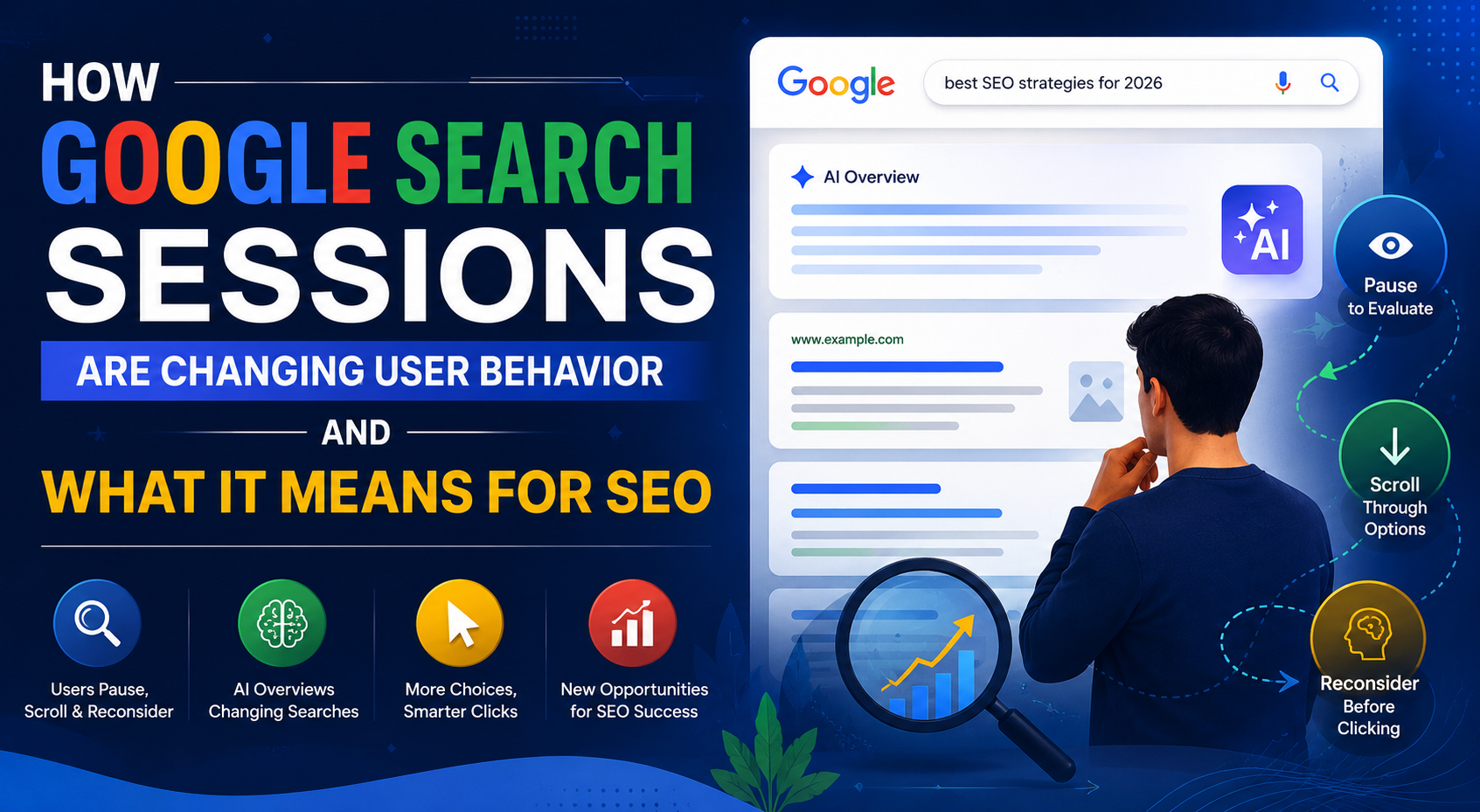
A Google Search session is the full journey someone goes through when searching for info online. Instead of just typing a query and hitting the first result, people now do more with the search page itself. They scroll, they bounce between options, they tweak their search, and they compare multiple websites before choosing what looks most useful.
Like, picture someone searching for “best SEO strategies for 2026.” They might first read Google’s quick summary, then check featured snippets, look at videos, compare blog titles, and even hop back to the search page more than once. The point is, user behavior is turning more deliberate, not just “click and done.”
So yeah, this reflects a real change in Google search behavior. People want information that feels credible, detailed, and actually relevant. Ranking high alone no longer guarantees traffic or clicks.
Why Are Users Pausing Before Clicking?
A big change in Google Search user behavior is that people pause more, and evaluate before selecting a result. Several things are pushing this.
First, AI-powered search experiences are everywhere now. Google keeps adding AI-generated answers and summaries right on the search page. Those quick takeaways help users understand the topic before they ever open a site. So users take time to compare what they’re seeing, and decide if they really need extra details.
This also affects what you might call AI search behavior. People end up being more careful, because they already have partial answers sitting in front of them. Instead of clicking right away, they ask themselves which source seems more trustworthy or practical.
Second, Google search pages are just more complex now. SERPs (search engine result pages) include far more than blue links. Users run into featured snippets, video results, People Also Ask boxes, reviews, maps, AI overviews, and knowledge panels. All of that gives multiple ways to get answers right away, which encourages longer scrolling and more back-and-forth comparison.
And in some cases, users revisit the results page multiple times before committing. That’s basically the death of the old one-click search journey.
The Growing Impact of Zero-Click Searches
One major consequence of changing Google Search sessions is the rise of zero-click searches. A zero-click search is when users get enough information directly from Google, and don’t feel compelled to click through to a website.
For instance, when people search for weather, currency conversion, sports scores, or quick facts, Google often answers instantly. The same thing happens with AI-generated search overviews, which can summarize the topic without requiring a visit to another page.
This is convenient for users, but it creates headaches for businesses that rely on organic traffic. Many companies see impressions stay high, while click-through rates become more unpredictable.
Still, this doesn’t mean SEO is dead or irrelevant. It means businesses have to build content that goes beyond the quick surface-level answer. Users will still click when they want deeper explanations, expert perspectives, real comparisons, and actionable advice that Google’s summaries can’t fully deliver.
Why Ranking First on Google Is No Longer Enough
For years, SEO often meant chasing the number one spot. Higher rankings typically brought more clicks and better visibility. But modern Google Search user behavior changes the whole outcome.
Now, users often scroll through multiple results before choosing. Even if your site ranks first, you may not win the highest click volume if your title, description, or on-page messaging doesn’t seem relevant enough.
Before clicking, users are basically asking themselves questions like these:
- Does the site feel reliable?
- Will the content actually answer my question clearly?
- Is there a better option lower on the page?
So now businesses have to optimize for more than rankings alone. User trust, engagement, and perceived usefulness matter just as much, maybe more. Strong headlines, persuasive meta descriptions, and genuinely helpful content can outweigh a purely positional advantage.
A title that clearly matches what the user is trying to do can outperform a generic title, even if that other page ranks slightly lower.
How Businesses Can Adapt Their SEO Strategy
Google Search sessions keep changing, so businesses have to rethink their SEO approach, a bit like… reshuffling the cards kind of. It’s not just a trend, it’s more like a shift in how people actually behave.
First off, you should focus on high-quality content. Short posts or generic, template blog pages don’t really cut it anymore. People want detailed stuff, viewpoints from real experts, concrete examples, and advice that feels practical, not vague.
Write for people first, and search engines second. Meaning, use plain language, answer questions in a direct way, and give real value. When users find a page useful they don’t just bounce quickly, they tend to hang around longer, check more pages, and start trusting the site.
Then there’s the whole titles and meta descriptions thing. Since users pause a little and reconsider before clicking, your search listing has to look interesting enough to win that click. A strong title that shows clear value can really lift click-through rates, even if everything else is similar.
Authority is also huge now. People lean toward brands and websites they recognize, and they want signs of credibility. So businesses should publish consistently, and cover related topics with solid quality so expertise shows up over time.
Like, let’s say a site is centered on SEO. It might publish deep pieces on keyword research, AI search trends, technical SEO , Google updates, and ranking tactics. Over time that kind of coverage builds topical authority and it also tells search engines, yes, this place really knows the subject.
The Future of SEO in an AI-Driven Search Environment
A lot of marketers are nervous that AI-powered search experiences will crush organic traffic for good. It’s true that user behavior is shifting, but SEO isn’t dead. Not even close.
Instead, SEO is starting to become more “intelligent” and more shaped around the user. The sites that keep winning will be the ones that put trust, expertise, and useful content at the center.
Users still want detailed guides, expert perspectives, reviews that feel grounded, comparisons, and thorough explanations—especially when a topic is complicated and not simple. AI summaries can cover basic questions, but they don’t fully replace human knowledge, real-world testing, or lived experience.
So companies that adapt to how Google search users behave now will keep building visibility and stay strong in search performance.
Final Thoughts
The way Google Search sessions are evolving shows one key thing: users are getting more careful before clicking. Instead of grabbing the first result right away, people pause, scroll, compare, and rethink their choices more than they used to.
That changes what “SEO success” looks like. Yes, ranking matters, but it isn’t the only lever anymore. Businesses should concentrate on creating content that’s trustworthy, genuinely helpful, and aligned with search intent, not just content that sounds keyword-friendly.
And as AI search behavior keeps evolving, the companies that stay focused on quality and real user experience will stay competitive. The future of SEO isn’t only about chasing positions—it’s about earning trust, getting engagement, and earning meaningful clicks that actually lead somewhere.