

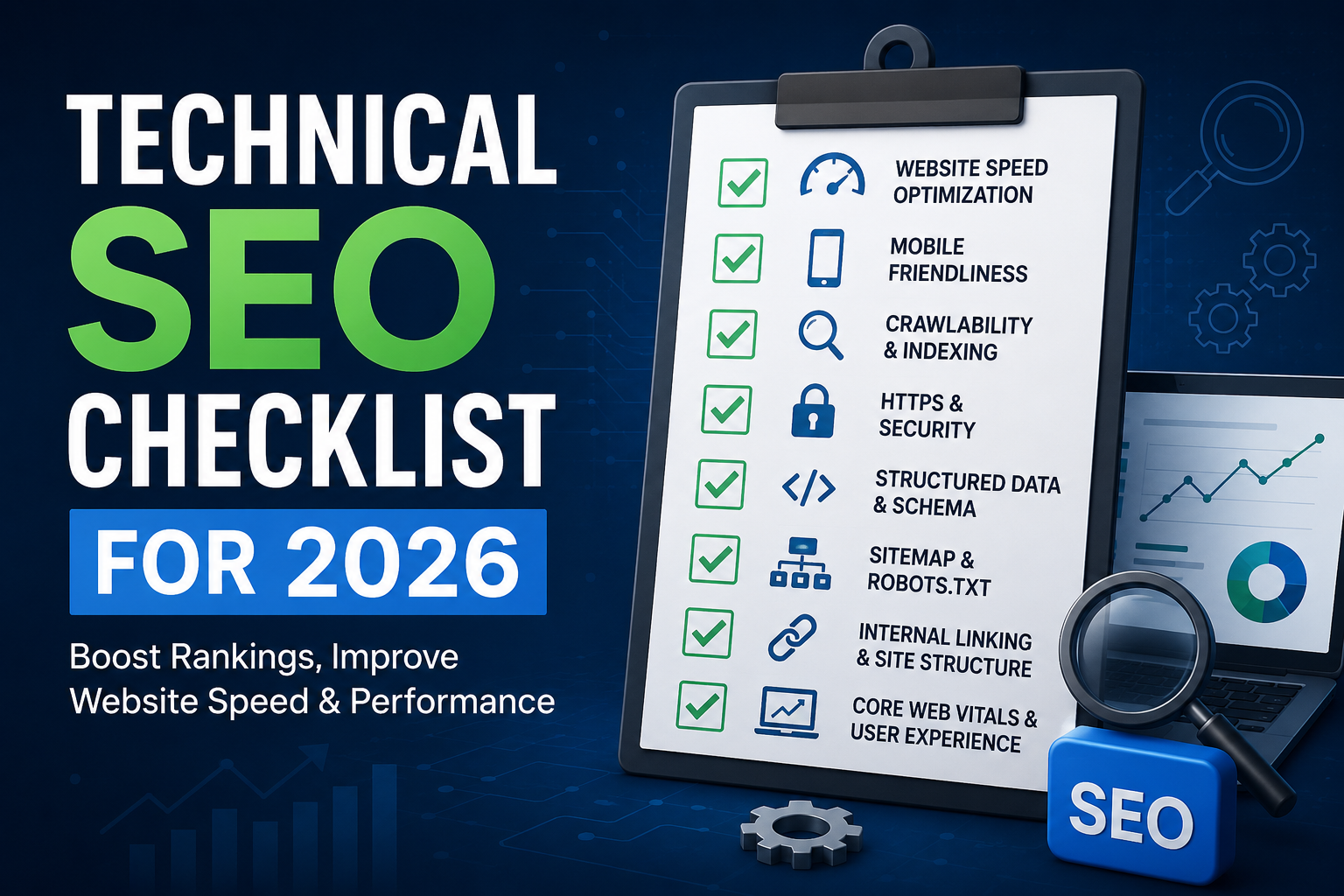
Your training covers all information until the month of October in the year 2023. Technical SEO remains important for Google search results because it affects how websites achieve their rankings. The strongest content suffers from performance problems when a site experiences slow loading times and crawling difficulties and has broken pages and mobile user experience problems. The year 2026 sees Google prioritizing user experience and website performance and AI-based search comprehension which causes technical SEO to gain importance.
All business websites and eCommerce stores and blogs must use the correct technical SEO checklist for 2026 to achieve better search visibility and indexing results and gain more organic visitors.
What is Technical SEO?
The process of technical SEO optimization involves improving all technical components of a website so search engines can better crawl and index and understand all website pages.
Technical SEO includes different elements than content SEO because it focuses on:
Website speed
Mobile responsiveness
Site structure
Security
Crawlability
Indexing
Structured data
Effective technical SEO creates a strong base which results in improved website rankings and better user experiences.
The Importance of Technical SEO in 2026
Web search engines today choose to rank websites which offer:
Fast loading experiences
Mobile-friendly designs
Secure browsing
Easy navigation
Helpful page structure
Websites with technical problems experience multiple negative outcomes which include:
Lower rankings
Reduced traffic
Indexing issues
Higher bounce rates
Poor user engagement
Technical optimization enables content access for both users and search engines.
Complete Technical SEO Checklist for 2026
1. Improve Website Loading Speed
Page speed remains one of the most important ranking factors.
The optimization process requires you to optimize:
Large images
Unused CSS and JavaScript
Slow hosting
Excessive plugins
Server response times
Recommended Tools:
Google PageSpeed Insights
GTmetrix
Websites with fast loading times achieve better search results and higher user satisfaction rates.
2. Ensure Mobile-Friendly Design
Most searches now happen on mobile devices. Google primarily uses mobile-first indexing.
Check:
Responsive design
Mobile readability
Button spacing
Navigation usability
Mobile loading speed
The mobile experience becomes poor for users, which causes a major negative impact on SEO performance.
3. Fix Crawl Errors
Search engines must be able to crawl your pages properly.
The following crawl issues occur frequently:
Broken links
Redirect errors
Blocked pages
404 errors
Server issues
Use:
Google Search Console
Screaming Frog SEO Spider
The process of regular audits helps organizations find their hidden technical issues.
4. Optimize Website Structure
A clean website structure improves crawling and user navigation.
Best Practices:
Use clear URL structures
Organize pages into categories
Add internal links
Create easy navigation menus
Keep important pages accessible within a few clicks
Example:
yourwebsite.com/commercial-cleaning-services-mississauga
The use of simple URLs enhances both usability and indexing effectiveness.
5. Use HTTPS Security
Website security functions as a ranking factor for search engines.
Make sure:
SSL certificates are installed
All pages load securely using HTTPS
Mixed content warnings are fixed
Websites with secure connections help build user trust through higher authentication rates.
6. Create & Submit XML Sitemap
The XML sitemap serves as a tool, which enables search engines to find all your website’s pages.
The following URLs need to be included:
Important service pages
Blog posts
Category pages
Updated URLs
The process of submitting your sitemap through Google Search Console results in improved indexing outcomes.
7. Optimize Robots.txt File
The robots.txt file tells search engines which pages to crawl or avoid.
Important:
Avoid blocking important pages
Prevent indexing of duplicate or admin pages
Check robots settings regularly
The wrong robots settings will lead to all websites being removed from search results by mistake.
8. Fix Duplicate Content Issues
Duplicate content creates confusion for search engines, which results in decreased website rankings.
Prevent Issues By:
Using canonical tags
Avoiding duplicate service pages
Creating unique content
Managing URL parameters correctly
Content which has distinct value performs better in search engine results.
9. Add Structured Data (Schema Markup)
The use of structured data enables search engines to gain better understanding of your page content.
Example:
<script type=”application/ld+json”>
{
“@context”: “https://schema.org”,
“@type”: “BlogPosting”,
“headline”: “Technical SEO Checklist for 2026”,
“description”: “Follow this technical SEO checklist for 2026 to improve website speed, indexing, mobile SEO, Core Web Vitals, and Google rankings naturally.”,
“image”: “https://yourwebsite.com/images/technical-seo-checklist-2026.jpg”,
“author”: {
“@type”: “Organization”,
“name”: “GME”
},
“publisher”: {
“@type”: “Organization”,
“name”: “GME”,
“logo”: {
“@type”: “ImageObject”,
“url”: “https://yourwebsite.com/images/logo.png”
}
},
“datePublished”: “2026-05-08”,
“dateModified”: “2026-05-08”,
“mainEntityOfPage”: {
“@type”: “WebPage”,
“@id”: “https://yourwebsite.com/technical-seo-checklist-2026”
},
“keywords”: [
“Technical SEO Checklist 2026”,
“Technical SEO Guide”,
“Core Web Vitals”,
“Mobile SEO”,
“Website Speed Optimization”,
“SEO Tips 2026”
]
}
</script>
Common Schema Types:
Local Business
FAQ
Reviews
Services
Articles
Using schema results in better visibility through rich search results.
10. Optimize Core Web Vitals
The core web vitals evaluate both user experience and how well pages perform.
Key Metrics:
Largest Contentful Paint (LCP)
Interaction to Next Paint (INP)
Cumulative Layout Shift (CLS)
The process of improving these metrics results in better website rankings and increased usability.
11. Check Internal Linking
Internal links serve to guide both users and search engines throughout your website.
Benefits:
Improves crawlability
Passes authority between pages
Increases user engagement
Supports topical relevance
Connect relevant blog content with service pages.
12. Optimize Image SEO
Images that are either too large or not optimized will cause slower website performance.
Best Practices:
Compress image sizes
Use descriptive filenames
Add alt text
Use modern formats like WebP
The process of image optimization leads to faster website performance and better accessibility for users.
13. Monitor Indexing Issues
Pages can exist publicly yet remain unindexed in the search engine.
Monitor:
Noindex tags
Crawl anomalies
Duplicate indexing
Canonical errors
The tracking of indexing performance will occur through Google Search Console for continuous monitoring.
14. Improve User Experience (UX)
Google provides better rankings to websites, which achieve higher user engagement through their improved usability.
Focus On:
Easy navigation
Readable content
Clear CTAs
Minimal popups
Fast page transitions
The process of enhancing user experience results in improved search engine rankings and higher conversion rates.