
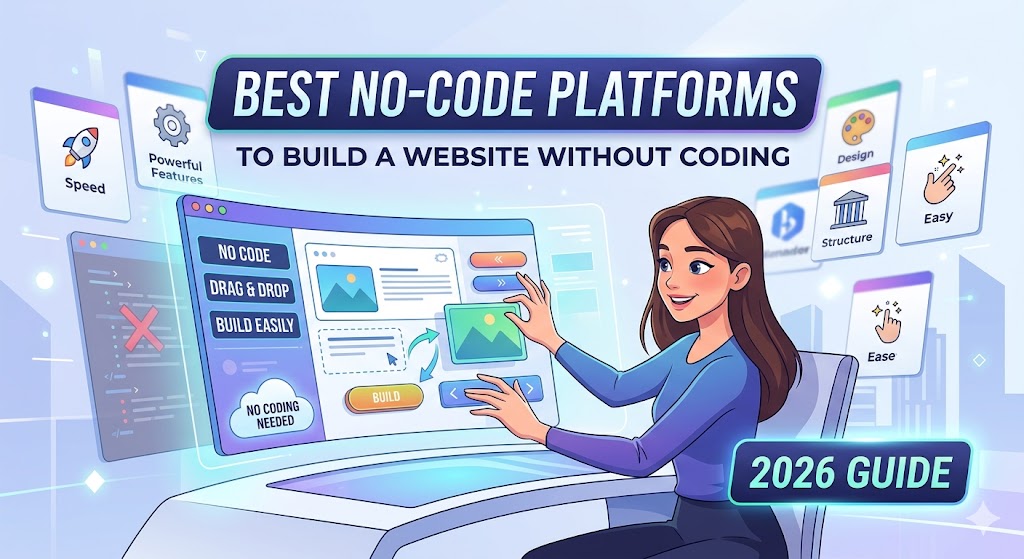
Building a website used to mean hiring developers or learning how to code. That’s no longer the case.
In 2026, no-code platforms have become powerful enough for businesses, freelancers, creators, and startups to build professional websites without touching a single line of code.
In this guide, you’ll discover the best no-code website builders, what they’re good at, where they struggle, and how to choose the right one for your goals.
What Is a No-Code Platform?
A no-code platform allows you to:
- Build websites visually
- Drag and drop elements
- Customize layouts without coding
* Think of it as website development through a visual interface instead of programming.
Why No-Code Platforms Are So Popular
1. Faster Development
You can launch websites in hours instead of weeks.
2. Lower Costs
No need to hire a full development team for simple projects.
3. Beginner-Friendly
Most platforms are designed for non-technical users.
4. Great for Rapid Testing
Perfect for:
- Landing pages
- MVPs
- Startup websites
- Portfolios
1. Webflow — Best for Design Flexibility
Why People Love It
Webflow gives near developer-level control without traditional coding.
Best For:
- Designers
- Agencies
- Modern business websites
Strengths:
- Clean visual editor
- Advanced animations
- Responsive design tools
Weakness:
* Slight learning curve for beginners.
2. Wix — Best for Beginners
If you want simplicity, Wix is one of the easiest platforms available.
Best For:
- Small businesses
- Personal websites
- Freelancers
Strengths:
- Drag-and-drop builder
- Large template library
- Quick setup
Weakness:
* Limited advanced customization.
3. Shopify — Best for Online Stores
Shopify dominates no-code eCommerce.
Best For:
- Selling products online
- Dropshipping
- Retail brands
Strengths:
- Easy store setup
- Payment integration
- Built-in eCommerce tools
Weakness:
* Monthly costs can increase with apps.
4. Bubble — Best for Web Apps
Bubble goes beyond websites.
You can build:
- SaaS products
- Marketplaces
- Membership platforms
Strengths:
- Powerful backend workflows
- Database support
- App-like functionality
Weakness:
* More complex than standard website builders.
5. Framer — Best for Modern Interactive Websites
Framer has become popular for sleek, animated websites.
Best For:
- Creative portfolios
- Startup landing pages
- Interactive experiences
Strengths:
- Beautiful animations
- Fast publishing
- Clean modern UI
Weakness:
👉 Not ideal for large complex websites.
Quick Comparison Table
| Platform | Best For | Ease of Use | Flexibility |
|---|---|---|---|
| Webflow | Designers & Agencies | Medium | High |
| Wix | Beginners | Very Easy | Medium |
| Shopify | eCommerce | Easy | Medium |
| Bubble | Web Apps | Medium-Hard | Very High |
| Framer | Interactive Sites | Easy | Medium-High |
Example: Simple No-Code Landing Page Structure
Even no-code platforms follow basic web structure principles.
<section class="hero">
  <h1>Launch Your Website Faster</h1>
  <p>No coding required</p>
  <button>Get Started</button>
</section>
* No-code tools visually generate structures like this behind the scenes.
How to Choose the Right No-Code Platform
Choose Webflow if:
- You care about design flexibility
- You want cleaner frontend control
Choose Wix if:
- You’re a complete beginner
- You want simplicity and speed
Choose Shopify if:
- Your focus is selling products online
Choose Bubble if:
- You want to build complex web apps
Choose Framer if:
- You want sleek, modern landing pages
Common Mistakes to Avoid
❌ Choosing Based Only on Popularity
The “best” platform depends on your goals.
❌ Ignoring Scalability
Some tools become limiting as your business grows.
❌ Overloading Your Website
Even no-code sites can become slow with too many animations or apps.
Real-World Insight
No-code doesn’t mean “low quality.”
Many successful startups now use no-code platforms to:
- Validate ideas quickly
- Launch MVPs
- Reduce development costs
👉 The key is choosing the right tool for the right project.
FAQ
Can I build a professional website without coding?
Yes. Modern no-code platforms are powerful enough for professional business websites.
Which no-code platform is best for beginners?
Wix is usually the easiest starting point.
Are no-code websites good for SEO?
Yes—if optimized properly with good content and performance practices.
Summary
No-code platforms have changed website development completely.
Key takeaway:
- You no longer need coding skills to launch a professional website
- Different platforms serve different goals
- Simplicity, speed, and scalability matter most
* The best platform is the one that fits your business—not the one with the most hype.
What Should You Do Next? (CTA)
Start by defining:
- What type of website you need
- Your budget
- Your technical comfort level
Then test 2–3 platforms before committing.
* Most no-code tools offer free plans, so experiment before investing heavily.
Start building your website today—without writing code