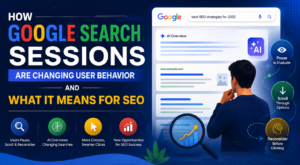


AI search engines have transformed information discovery because users now seek direct answers through ChatGPT and Gemini and Perplexity instead of searching Google. Your website design must include AI search features otherwise you will lose potential visitors and leads and brand recognition. This guide shows you how to make your site more visible and “citable” inside AI‑driven answers.
How AI Search Functions as a Vital Component of Your Website
Platforms like ChatGPT, Gemini, and Perplexity pull content from the open web to form their answers. The platform prefers content which presents information through organized structure and clear language.
AI search rewards:
- Content that answers real questions in a straightforward way.
- Websites which maintain operational speed while providing a friendly experience for mobile devices through solid technical designs.
The process of optimizing AI search improves organic SEO which leads to multiple advantages from your optimization efforts.
1. Write for Question‑Based Queries
AI tools often respond to questions like “How do I optimize my website?” or “What is AI search SEO?” You should organize your content according to actual user questions because this reflects the way people search for information.
What to do:
- Transform your primary subject into five to ten question-based H2s which include topics like “How to Structure Content for AI?” and “Why Is Technical SEO Important for AI?”.
- Directly respond to each question by writing two to four brief paragraphs and then creating a bullet-point summary.
- Your pages should contain extensive content which allows AI to extract essential information from multiple paragraphs.
The section “How to Make Your Content AI‑Friendly” allows you to include these content elements:
- Use clear headings that sound like questions.
- Begin each section with a concise one‑sentence answer first.
- Break explanations into short paragraphs and bullet points.
2. Improve Technical SEO for AI Crawlers
AI systems need search engines and crawlers to find your website content. Your site needs to function properly at fast speeds so search engines can discover its content throughout the entire site.
Key technical steps:
- Make sure your site loads quickly: compress images, enable caching, and use a fast hosting setup.
- All website pages must be accessible on mobile devices while maintaining core performance standards and usability tests.
- The process requires fixing all broken links and correcting robots.txt errors and establishing proper XML sitemap files to ensure proper content discovery by search engines.
The combination of using HTTPS and maintaining a straightforward URL structure enhances both user trust and AI tool usability.
3. Use Clear Structure and Scan‑Friendly Formatting
AI models read by breaking pages into sections, sentences, and lists. Well-structured pages are much more likely to be quoted.
Structure tips:
- Use one clear H1 and then logical H2/H3 layers that follow the user’s intent.
- Keep paragraphs short (2–3 sentences) and use bullet lists or numbered steps for complex ideas.
- Add a brief “in‑brief” summary to the top of the page so AI can find a quick answer before reading further.
Instead of long, dense paragraphs, write things like:
How to Improve Readability for AI
- Use one idea per paragraph.
- Highlight key terms naturally in the text.
- Break explanations into steps with clear headings.
4. Optimize for Semantic Search and Topic Clusters
The AI system recognizes context together with associated topics and it does not limit its understanding to individual keywords. The system searches for pages which provide comprehensive coverage of a topic while establishing connections between different related materials.
How to align with this:
- Build topic clusters that include one main page which organizes related pages about “AI‑Friendly SEO” and “Schema for Local Businesses” and “Speed Optimization for AI”.
- Use natural language and related phrases instead of repeating the same keyword over and over.
- Create interlinks between cluster pages which help users navigate your site as an authoritative resource.
The main page “How to Optimize Your Website for AI Search” links to supportive content which includes “How to Speed Up WordPress for Crawling” and “FAQ Schema for Service Businesses”.
5. Add Schema Markup and Structured Data
Structured data enables AI systems to determine your page content by specifying whether the page contains a blog post or FAQ or how-to guide or local service page.
Recommended schema types:
- FAQPage for common questions with short answers.
- Article, HowTo, and LocalBusiness for service‑based and informational pages.
- Review or AggregateRating schema for product or service feedback.
The majority of contemporary SEO plugins together with CMS systems offer integrated schema generators which let you implement these markup elements without needing programming skills.
6. Publish Fresh, Authoritative, and Citable Content
AI tools prefer content that feels up‑to‑date, trustworthy, and written by someone with real expertise.
Best practices:
- Revisit older posts regularly and update them with new data, examples, and screenshots.
- Include clear author information and links to professional profiles where relevant.
- Create content that combines “evergreen” topics with “timely” elements to establish current industry standards about AI search behaviors in 2026.
The content which functions as a mini-guide uses examples and provides step-by-step explanations and visual aids results in higher quotation rates within AI responses.
7. Monitor and Track AI Visibility
Traditional analytics do not provide clear indications about AI search visibility. You need to watch new signals.
What to track:
- Organic traffic sources that may be influenced by AI search.
- Mentions of your domain inside AI answers when you test relevant queries.
- Technical issues that reduce crawlability or indexing, which indirectly hurt your AI visibility.
Use this data to refine your most important pages, double‑down on topics that perform well, and update under‑performing content.
Next Step: Your AI‑Ready Checklist
AI search has emerged as a primary method which users use to find and evaluate businesses.
Your next move:
- Select one important webpage to rewrite using question-based headings and short paragraphs and FAQ-style schema.
- Conduct a fast technical assessment to repair three major problems which include speed and mobile performance and broken links and schema errors.
- Return to share your findings or request a personalized assessment so we can assist you in developing an AI-SEO strategy that suits your business needs and your local customer base.
Your website optimization for ChatGPT and Gemini and Perplexity will establish your brand as the first answer that AI provides when users enter their initial query.