

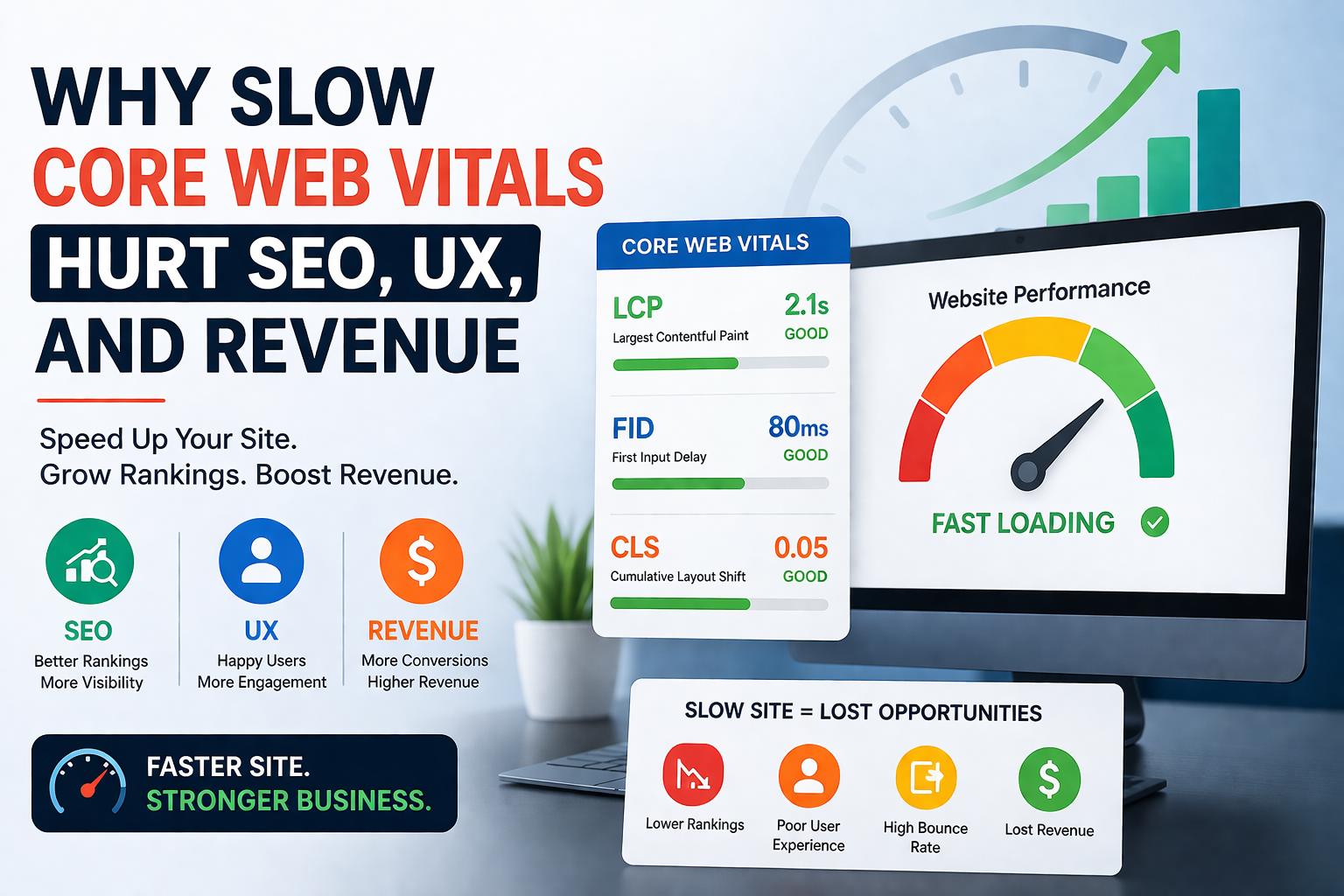
Website speed has transformed from being a technical matter into something that actively shapes user website interactions and determines search engine rankings and influences your business revenue.
Businesses should not spend their money on design and content development while they neglect website performance. The result? A beautiful website that loads slowly, frustrates users, and fails to convert.
Core Web Vitals exist to create a standard for web performance measurement.
Google established Core Web Vitals as performance indicators to assess actual user interactions with websites. Slow performance in these areas leads to negative effects on SEO and user interaction and all aspects of business development.
We will explain the reasons why Core Web Vitals function at slow speeds present major challenges and describe the methods for solving this problem.
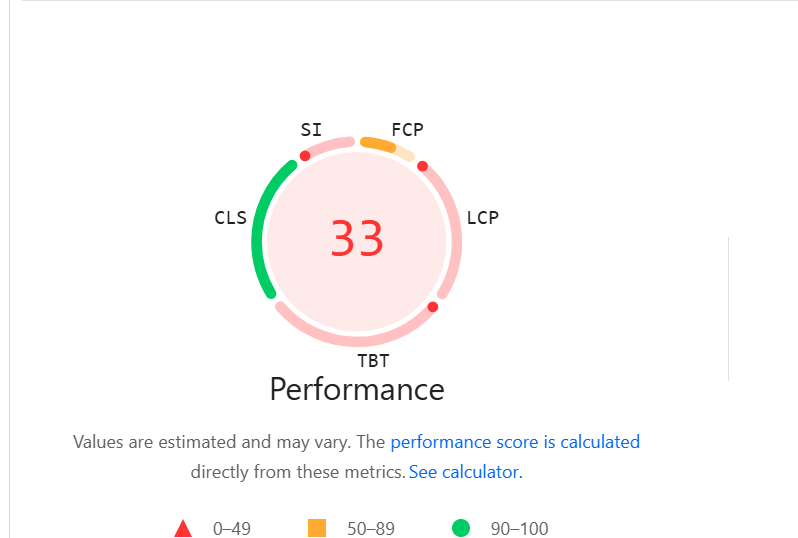
What Are Core Web Vitals?
Core Web Vitals evaluate three fundamental components that shape user experience.
Largest Contentful Paint (LCP) measures the speed at which the main content becomes visible to users. First Input Delay (FID) measures the time needed for a website to respond after a user performs an action. Cumulative Layout Shift (CLS) measures the amount of layout movement that occurs on a webpage during its loading process.
- Largest Contentful Paint (LCP): Measures how fast the main content loads → Good: ≤ 2.5s | Poor: > 4s
- First Input Delay (FID): Measures how quickly the site responds to user actions → Good: ≤ 100ms | Poor: > 300ms
- Cumulative Layout Shift (CLS): Measures how stable the page layout is while loading → Good: ≤ 0.1 | Poor: > 0.25
These metrics enable search engines to determine whether real users experience your website as fast and smooth which verifies the theoretical user experience.
Why Core Web Vitals Matter More Than Ever
Search engines now use user experience as a crucial factor when determining website rankings. Your website will face difficulties even when your content meets quality standards because of slow loading times.
The effects of the situation extend beyond its impact on website rankings.
Slow performance affects:
how long users remain on your website
whether they develop trust in your business
whether they perform actions like calling your company or signing up or buying from you
How Slow Core Web Vitals Hurt SEO
1. Lower Search Rankings
Search engines aim to present users with the most relevant results. Your website sends a negative signal to search engines when it demonstrates slow performance or shows instability.
Competitors who operate faster websites will achieve better rankings than your website which contains strong content.
2. Poor Crawl Efficiency
Search engines Face challenges when they need to crawl websites that contain slow-loading pages.
The situation creates two results:
fewer pages become available for indexing
search results become updated at a slower pace
3. Reduced Visibility Over Time
Your organic traffic will decline as your rankings decrease due to performance problems.
How Slow Core Web Vitals Hurt User Experience (UX)
1. Users Leave Before the Page Loads
Users will exit your website when it requires excessive time to finish loading.
People expect pages to load quickly. Even a few extra seconds can increase bounce rates significantly.
2. Frustration Due to Delays
Users interpret slow interaction with high FID as a sign that the site has stopped functioning.
The double-click action creates a waiting period which causes users to become frustrated and distrust the website.
3. Layout Shifts Damage Usability
When elements move unexpectedly (high CLS), users may:
click the wrong button
lose their place
feel confused
Your site creates a negative user experience because of this problem which makes it appear unprofessional.
How Slow Core Web Vitals Hurt Revenue
1. Fewer Conversions
The website operates at a slow speed which decreases the likelihood that users will complete actions like:
filling out a form
making a purchase
contacting your business
Even small delays can reduce conversion rates.
2. Loss of Potential Customers
Users who leave your site due to slow speed often go to competitors.
The business will lose important prospects that will prove challenging to win back.
3. Lower Customer Trust
A slow or unstable website gives the impression that your business is outdated or unreliable.
Trust plays a huge role in conversion—and performance directly affects it.
Common Reasons for Slow Core Web Vitals
Most websites experience performance difficulties because of:
- large unoptimized images
- too many scripts or plugins
- poor hosting performance
- excessive third-party tools
- lack of caching
These problems occur frequently in websites that contain many content elements or use multiple plugins.
How to Improve Core Web Vitals
Performance improvement requires only small adjustments instead of major system transformations. Small optimizations can make a big difference.
1. Optimize Images
compress images without losing quality
use modern formats
avoid oversized images
2. Reduce Unnecessary Scripts
remove unused plugins
limit third-party tools
load scripts efficiently
3. Improve Hosting
A reliable hosting environment ensures faster load times and better stability.
4. Use Caching and CDN
caching reduces load time for repeat visitors
CDNs deliver content faster across locations
5. Focus on Clean Design
Avoid heavy animations and complex layouts that slow down performance.
The Connection Between SEO, UX, and Revenue
Core Web Vitals exist at the intersection point which connects:
- SEO (search rankings)
- UX (user experience)
- revenue (business results)
If performance is poor:
- rankings drop
- users leave
- conversions decline
If performance is strong:
- rankings improve
- users stay longer
- conversions increase
Slow Core Web Vitals create technical issues which directly impact your website’s ability to succeed.
A fast website combined with stable performance and active responsiveness provides users with an enhanced experience while boosting your search visibility and lead generation and revenue.
Businesses should begin their operations by prioritizing performance while they establish their design and content development processes.
Speed has become an essential requirement which businesses must fulfill to operate successfully in today’s digital environment.