
Your existing knowledge base contains information up until the month of October in the year 2023.
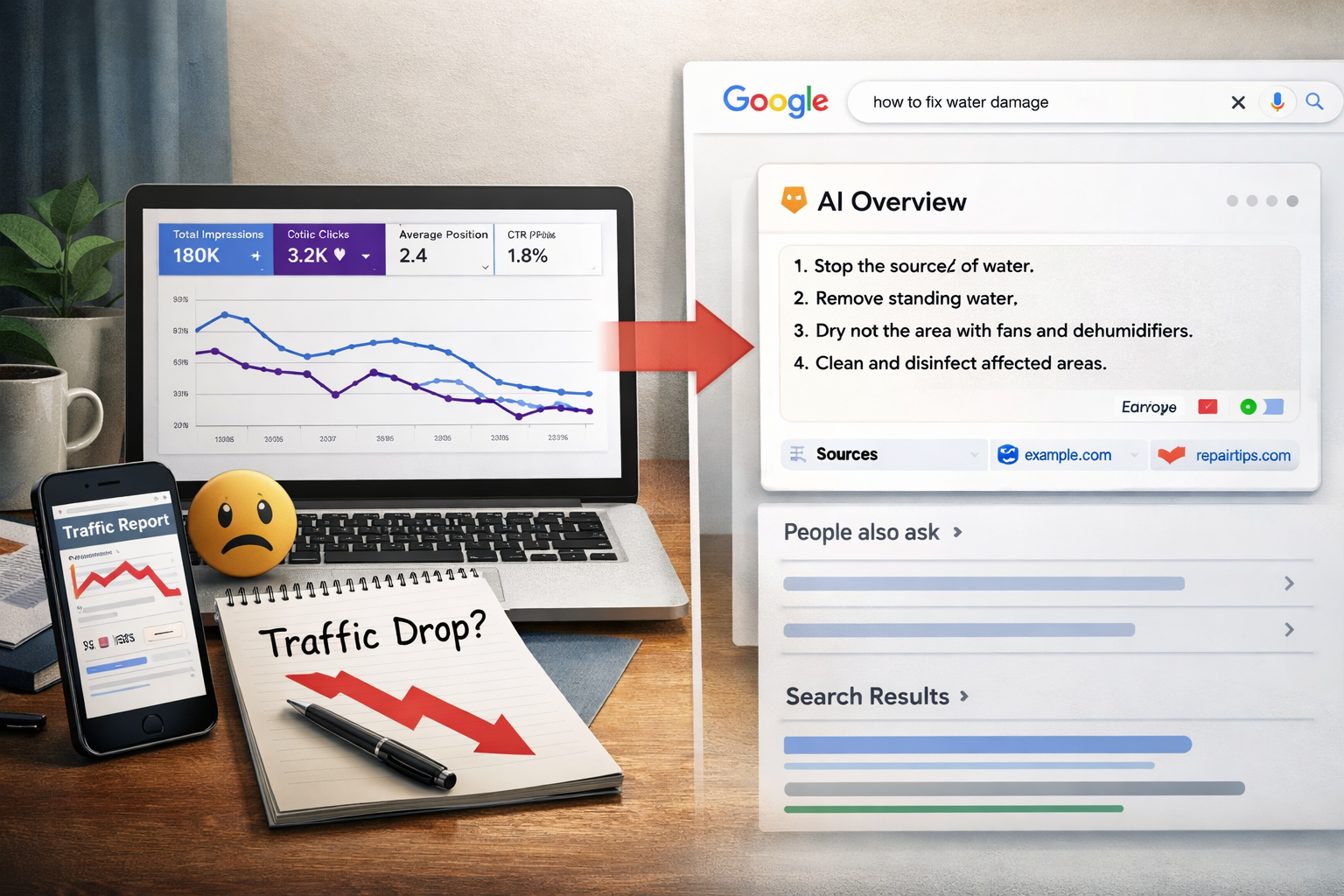
Your website experiences a decline in traffic, yet your keyword rankings remain stable, which confirms your observation.
The present time marks the period when businesses face their most significant transformation to search engine optimization.
Google Search Console users encounter a recurring problem which leads to their dissatisfaction with its results:
The user experiences increased impressions while their rankings remain unchanged and their keyword performance improves yet their clicks decrease every month.
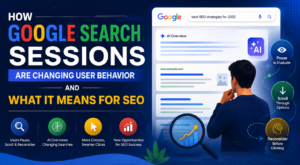
Google AI Overviews represent the primary factor which drives this upward trend.
Google has modified its search operations by implementing advanced AI systems to deliver instant answers to numerous inquiries through generated summaries displayed within search results.
Users are able to obtain their desired information without needing to access your website.
The evolution of organic traffic has undergone a significant transformation which particularly impacts websites that depend on their informational blogs and guides and FAQs and awareness-stage SEO content.
The positive aspect of this situation indicates that search engine optimization remains active.
The previous successful strategy now requires a new approach to implementation.
This guide will explain the reasons behind organic traffic loss following Google AI Overviews and the most effective methods to regain lost online presence.
What Changed With Google AI Overviews?
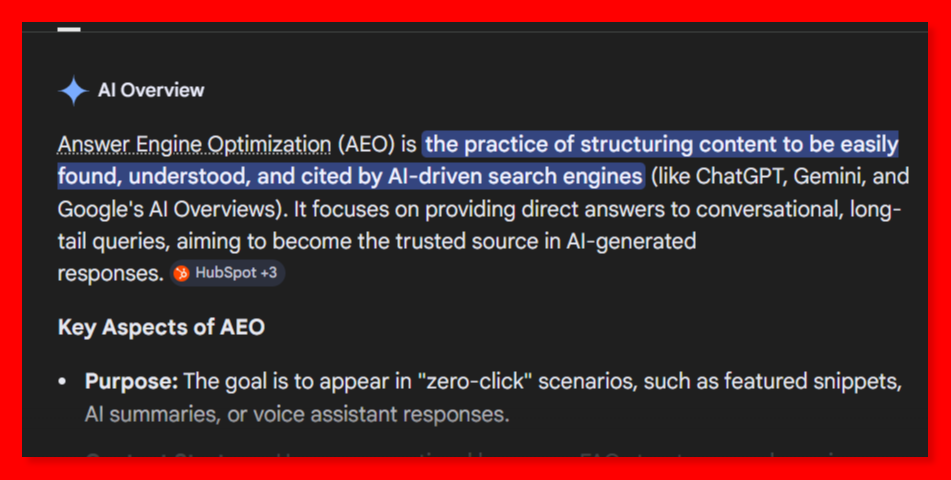
Google AI Overviews present AI-generated summaries which display on top of standard organic search outcomes.
Google now provides users with:
direct explanations
quick step-by-step answers
comparisons
pros and cons
recommendations
follow-up questions
highlighted source links
Google has introduced a new way for users to obtain knowledge which results in dramatic alterations to their clicking patterns.
Google can now provide instantaneous answers to most inquiries about the following topics:
AI Overviews have been shown to decrease organic click-through rates by 34–61% during 2026 research studies, which indicates the variation depends on the user’s query intent and the type of device used.
Google AI Overviews can produce multiple direct answers to a user’s inquiry without requiring them to visit a specific website.
Google AI Overviews produced multiple direct answers to a user’s inquiry without requiring them to visit a specific website.
Zero-Click Search Growth Is The Main Factor Which Caused Traffic Declines.
The primary cause of traffic decline results from people adopting zero-click search patterns.
The user completes their search journey inside Google itself.
The first search flow which existed before today functioned like this:
user searches → clicks your article → reads → explores service page → converts later
The new search flow often looks like this:
user searches → reads AI summary → leaves search results
No click.
No pageview.
No session in analytics.
The following content types typically exhibit high rates of occurrence:
definitions
beginner how-to posts
short guides
FAQs
comparison blogs
list articles
general advice content
Research in 2026 found that AI-generated search summaries reduced traffic to exposed informational pages by around 15% on average, with some niches losing much more.
If your SEO strategy relied heavily on educational blog traffic, the changes you experienced become substantial.
Informational Keywords Were Hit the Hardest
The impact of different keyword types on search engine results shows that they exist in varying degrees of effect.
The biggest traffic drops usually happen on top-of-funnel informational searches.
Examples include:
what causes mold after flooding
how to clean office carpets
how to remove smoke odor
what is post-construction cleaning
why retail floor maintenance matters
These searches are easy for AI to summarize.
Google often delivers satisfactory results to users without requiring them to visit your website.
The current situation has resulted in multiple websites experiencing
more impressions
fewer clicks
lower CTR
stable rankings
weaker blog traffic
The content remains visible to users.
The user just never needs to open it.
Users experience confusion because they believe stable rankings should produce stable traffic results.
The search results page now displays AI Overviews which occupy multiple areas within the page.
A typical results page may now show:
AI Overview
ads
video carousel
People Also Ask
map pack
Reddit/forum results
organic listings
Mobile displays can now push even first-place rankings below the visible area.
Your ranking tracker may display position 1 or 2 while your actual visibility has decreased.
The reason why SEO reports fail to show traffic loss occurs because people fail to recognize the problem.
Mid-Ranking Pages Lost the Most Clicks
The group of pages which receives the greatest traffic damage includes those which occupy positions 3 to 10.
Why?
Google commonly mentions only the most credible resources in the AI Overview content which describes a specific topic.
If your content is not selected as a citation source, your visibility drops fast.
Recent 2026 studies show:
cited pages gain 20–40% more CTR
non-cited pages lose 15–25% traffic
positions 3–10 suffer the most
The present situation has created an SEO system which benefits those who possess dominant authority over search engine results.
Strong authority sites gain more trust.
Content that possesses average quality loses its ability to draw attention.
The performance of service pages and local Search Engine Optimization concepts continues to show better results because certain traffic sources continue to function.
The good news is not all traffic is declining.
Pages that focus on service and local area and conversion activities maintain better performance.
Examples:
flood restoration quote
office sanitization company
same-day mold inspection
The current search requirements depend on:
local trust
phone numbers
pricing decisions
reviews
urgency
human action
AI technology allows users to create summaries of information but it lacks the ability to control actual purchasing processes.
The superior performance of service pages compared to blog pages occurs after Google AI Overviews.
The solution to this problem requires organizations to create more specific content formats which AI programs cannot completely duplicate.
The solution is to create content AI cannot fully replace.
The present effective framework includes the following:
Create First-Hand Experience Content
AI possesses ability to summarize widespread information.
AI technology can provide summaries about common knowledge, yet it faces challenges when it comes to producing authentic work and creating validated material.
Better blog angles include:
how we handled a warehouse flood cleanup in 6 hours
lessons from emergency water extraction in winter
before-and-after office deep cleaning case study
mistakes building owners make after leak damage
This type of content adds:
original insights
timelines
costs
unique photos
expert decisions
local scenarios
How to Recover Organic Traffic After Google AI Overviews
Publishing more generic content does not resolve the problem.
The solution requires creators to produce material which AI technology cannot completely generate.
Here is what works now.
1) Create First-Hand Experience Content
AI can summarize common knowledge.
The system fails to process authentic experiences together with content which requires factual verification.
Better blog angles include:
how we handled a warehouse flood cleanup in 6 hours
lessons from emergency water extraction in winter
before-and-after office deep cleaning case study
mistakes building owners make after leak damage
The content provides three types of additional value which AI systems cannot reproduce.
2) Build Topic Clusters, Not Single Blogs
Standalone blog posts lack the same effectiveness as they did in earlier times.
Google now awards increased benefits to websites which demonstrate topic mastery.
Build clusters to create content instead of publishing unrelated posts.
Example: Water Damage SEO Cluster
causes of basement flooding
emergency water extraction steps
mold prevention after leaks
insurance claim checklist
drying timelines
restoration service page
Your organization gains enhanced capabilities which enable you to become an established reference source for AI Overviews.
3) Optimize Content for AI Citation
Modern SEO requirements extend beyond achieving better search engine positions.
The goal is to get cited inside Google AI Overviews.
To improve your chances:
use question-based H2 headings
answer directly in 2–3 lines
add FAQ schema
include expert author sections
use original stats
refresh outdated pages
strengthen internal links
add location mentions naturally
improve E-E-A-T signals
Your content should appear as a format which Google extracts information from which it can trust.
4) Shift From Traffic Metrics to Lead Metrics
The biggest mindset shift businesses need involves this specific change.
A business sees reduced traffic which does not affect its ability to generate revenue.
AI systems remove visitors who lacked any intention to convert from the site.
Track what matters:
calls
contact forms
quote requests
booked services
revenue by landing page
local map actions
consultation requests
Fewer visits often lead to better lead quality results for businesses.
5) Grow Branded Search Demand
The safest SEO traffic today is brand-led traffic.
When people search your company directly, AI Overviews have less impact.
Examples:
your company + cleaning services
your brand + restoration
company name + emergency support
Ways to improve branded demand:
LinkedIn authority posts
YouTube educational videos
local PR mentions
case studies
customer testimonials
Google review growth
email remarketing
The new SEO layout creates a system which prevents businesses from relying on unpredictable search engine result page designs.
The Future of SEO After AI Overviews
SEO will continue to exist in the future.
The sector transforms from traditional ranking practices to modern authority-based search engine optimization.
The new winners are brands that focus on:
service intent pages
local SEO
topic clusters
case studies
expert proof
unique first-hand content
internal link depth
brand visibility
AI citation readiness
A certain process will return website traffic back to its previous state in 2026.
The drop in your organic traffic after Google AI Overviews indicates your SEO strategy failed.
The business shifted its click distribution method from its previous system.
The businesses that recover fastest are the ones that shift from:
publishing for pageviews
to
publishing for trust, citations, and conversions
Focus on:
high-intent service pages
unique experience content
stronger internal linking
citation-friendly formatting
branded demand
lead-focused KPIs
The new SEO growth model which emerged after AI Overviews uses these specific elements.