
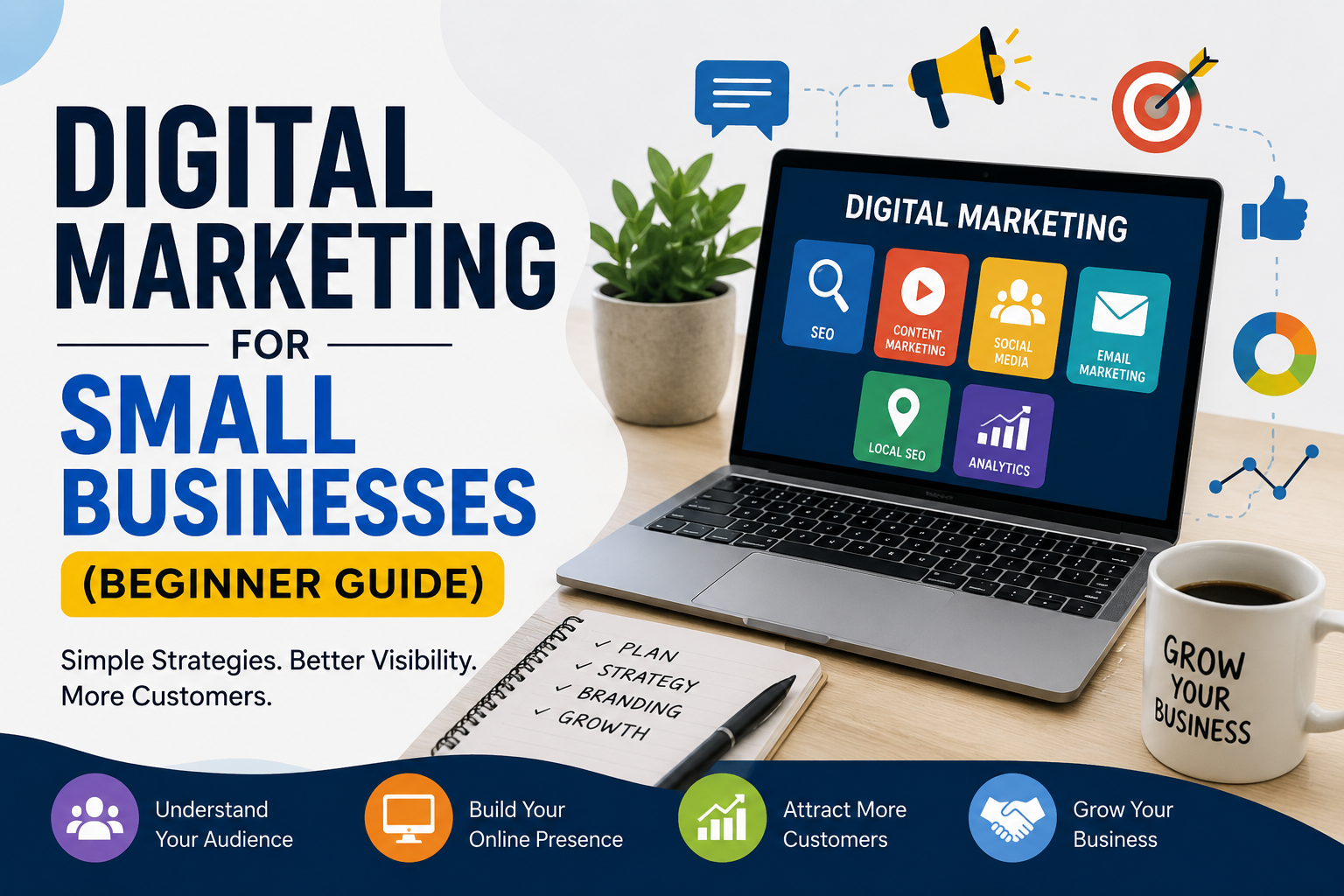
Starting and growing a small business today is not only about having a solid product or service, it’s also kind about where people look before they decide. Most customers search online these days, like almost always. If somebody wants a local contractor, a restaurant, a cleaning company, an online shop or some professional help, the first stop is usually Google. they just… go there.
And that’s where digital marketing matters.
Digital marketing lets small businesses connect with customers online, get more visibility, bring in leads, and still build long-term brand belief. The nice part is that you do not always need huge spending to show up online. With the right mix of tactics, even a local business can pull in customers consistently and make its online presence stronger.
This beginner guide covers the basics of digital marketing, why it counts, and how small businesses can start building a real online marketing strategy in 2026.
What Is Digital Marketing?
Digital marketing is basically promoting a business through online platforms and digital channels. Instead of leaning only on old-school ads like flyers or newspaper spots, companies use websites, search engines, social media, online ads, and email outreach to reach customers.
Common digital marketing channels include:
search engine optimization (SEO)
Google Ads
social media marketing
content marketing
email campaigns
local SEO
online reputation management
The main idea is simple: make it easier for people to find your business online, then encourage them to contact you, or buy from you.
Why Digital Marketing Is Important for Small Businesses
People spend more time online than ever. Before choosing a company, most folks look up things like:
- reviews
- pricing
- business websites
- nearby services
- customer feedback
- FAQs
If your business does not show up online, it’s pretty likely customers will go with a competitor instead.
Digital marketing helps small businesses do things like:
boost online visibility
bring in nearby customers
generate qualified leads
strengthen customer trust
compete with bigger brands
grow revenue bit by bit over time
Benefits of Digital Marketing
Cost-Effective Marketing
Compared with traditional advertising, digital marketing often costs less, while still targeting the right audience.
Small businesses can:
set flexible budgets
measure results
improve campaigns as they go
stay focused on local customers
Even smaller steps, like local SEO or regular social posts, can create ongoing value.
Better Local Visibility
Local digital marketing makes it easier for nearby customers to discover you.
For instance, people type searches such as:
If you optimize for local searches, you can show up in:
Google Maps
local search results
mobile searches
Builds Trust & Credibility
Customers tend to trust businesses that have:
a professional-looking website
positive Google reviews
active social media pages
useful content
clear business details
A strong online presence can build confidence even before a customer contacts you.
Long-Term Business Growth
Some traditional advertising stops producing results once you stop paying. Digital marketing can keep driving traffic and leads long after you publish, depending on the strategy.
SEO, blogging, and helpful content can support long-term visibility without needing constant ad spend.
Essential Digital Marketing Strategies for Beginners
You do not need every single strategy right away. Starting with the basics is often the smartest path.
1. Build a Professional Website
A website is the base of digital marketing.
Your site should:
load quickly
work well on mobile devices
explain your services clearly
show contact information
include strong calls-to-action
use local keywords in a natural way
People often judge whether to trust a business based on how the website looks and feels.
2. Focus on Local SEO
Local SEO helps you appear when customers nearby search online.
Key local SEO pieces include:
Google Business Profile optimization
city-based keywords
customer reviews
local landing pages
accurate business information
This is especially important for service businesses and local stores.
3. Optimize Your Google Business Profile
Google Business Profile is one of the most valuable free tools for local businesses.
A complete profile can help with:
Google Maps rankings
phone calls
local visibility
customer trust
Make sure to keep updated:
business hours
photos
services
posts
customer reviews
4. Create Helpful Content
Content marketing helps businesses educate customers while also improving SEO.
Examples are:
blogs
guides
FAQs
service pages
videos
Helpful content answers customer questions and also builds website authority over time.
5. Use Social Media Consistently
Social media keeps businesses visible and helps you interact with customers.
Common platforms include:
Facebook
Instagram
LinkedIn
TikTok
YouTube
Small businesses can post things like:
promotions
project photos
customer success stories
behind-the-scenes content
educational tips
Consistency usually beats posting nonstop.
6. Encourage Customer Reviews
Online reviews really impact buying decisions.
Positive reviews can improve:
trust
local SEO rankings
conversions
your overall reputation
Ask happy customers to leave reviews on:
Google
Facebook
Yelp
And always respond professionally, whether the feedback is good or bad.
7. Try Email Marketing
Email marketing stays one of the highest ROI marketing approaches.
You can use email for:
promotions
newsletters
appointment reminders
seasonal discounts
customer updates
When you build an email list, you can keep relationships strong long-term.
8. Consider Paid Advertising
Paid ads can bring faster visibility than some organic tactics.
Popular options include:
Google Ads
Facebook Ads
Instagram Ads