
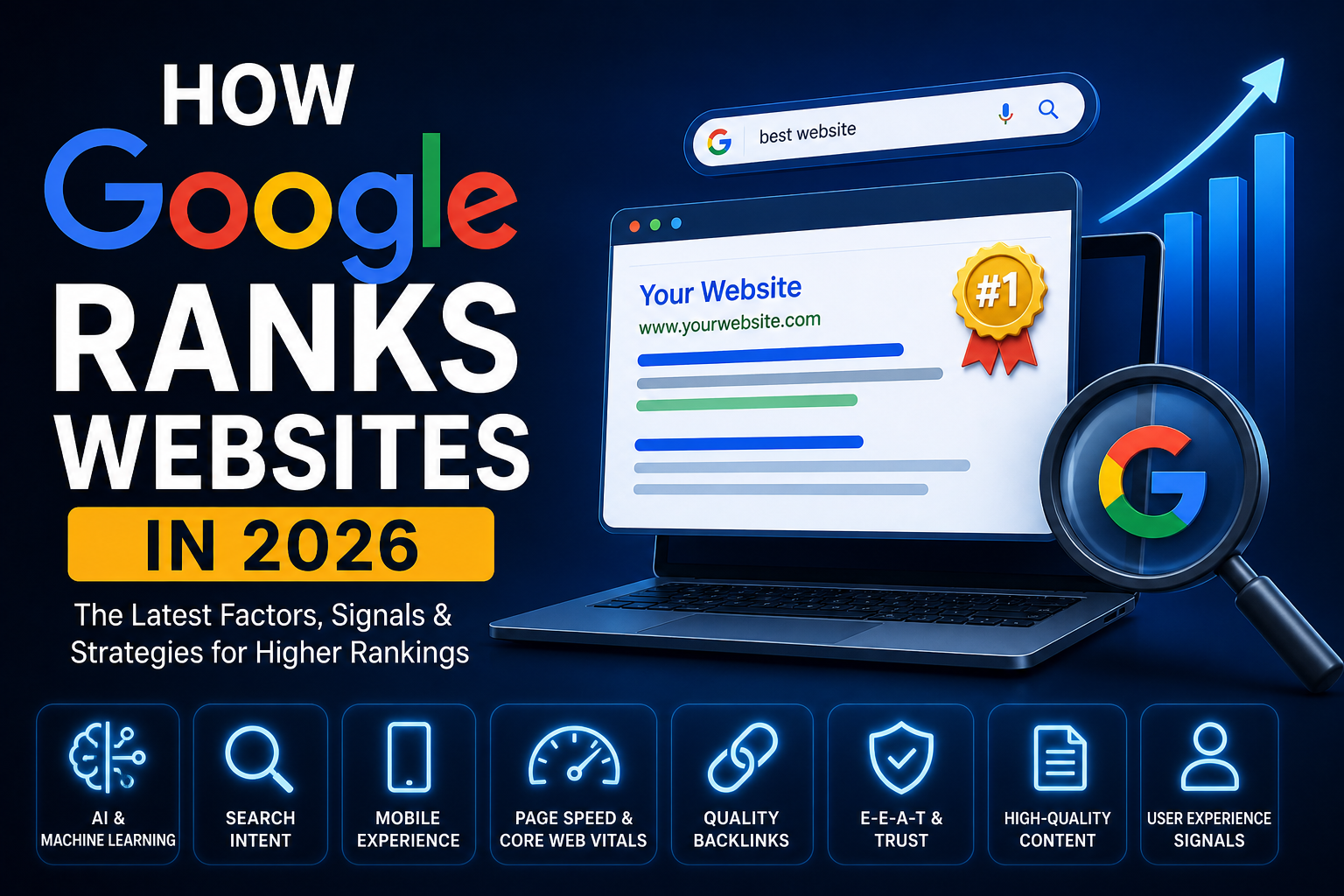
Understanding how Google ranks websites has always been crucial for digital marketers, SEO professionals, and website owners alike. As we look ahead to 2026, the landscape of search engine optimization continues to evolve at a rapid pace, driven by technological advancements and changing user behaviors. Google’s ranking algorithms are expected to become even more sophisticated, prioritizing relevance, quality, and user experience in unprecedented ways. In this comprehensive guide, we will explore the key factors that will influence how Google ranks websites in 2026, providing insights into emerging trends and best practices to stay ahead in the ever-competitive digital arena.
The Evolution of Google’s Ranking Algorithm
Google’s ranking algorithm has undergone significant transformations over the years, adapting to new technologies and user expectations. By 2026, these changes are anticipated to be more profound than ever before. The core goal remains consistent: delivering the most relevant, authoritative, and engaging results to users’ queries. However, the methods employed to achieve this are expected to incorporate advanced artificial intelligence (AI), machine learning (ML), and semantic understanding capabilities. These developments will enable Google to better interpret context, intent, and nuances within search queries. As a result, websites will need to optimize not just for keywords but for holistic relevance and user satisfaction.
- Anticipated Developments:
- Increased reliance on AI-driven content analysis
- Greater emphasis on understanding user intent
- Enhanced contextual relevance through semantic search
- These advancements mean that traditional keyword stuffing or superficial SEO tactics will no longer suffice. Instead, website owners must focus on creating meaningful content aligned with genuine user needs. Staying informed about these algorithmic shifts is essential for maintaining high rankings in 2026.
The Role of AI and Machine Learning in Search Rankings
Artificial intelligence (AI) and machine learning (ML) are set to play an even more prominent role in determining website rankings by 2026. Google’s systems like BERT and MUM have already revolutionized natural language processing (NLP), allowing search engines to grasp complex queries more accurately. In the future, these AI models will become more advanced, capable of understanding subtleties such as tone, intent, and even emotional context behind search queries. This means that content must be crafted with a deeper understanding of audience needs rather than relying solely on keyword optimization.
- Implications for Website Optimization:
- Focus on conversational content that mimics natural language
- Prioritize topics that address specific user pain points
- Use structured data to help AI understand your content better
- Implementing AI-friendly strategies involves creating comprehensive content that answers questions thoroughly while maintaining clarity and coherence. As AI models become smarter at assessing quality and relevance, websites offering genuine value will rank higher.
User Experience (UX) as a Dominant Ranking Factor
In 2026, user experience (UX) is expected to be one of the most influential factors affecting search rankings. Google continuously emphasizes delivering results that satisfy users’ needs efficiently; therefore, sites with superior UX design will enjoy higher visibility. Factors such as page load speed, mobile responsiveness, intuitive navigation, and accessibility are critical components of an optimal UX environment. Additionally, engagement metrics like bounce rate, dwell time, and click-through rates increasingly serve as signals for ranking algorithms.
- Key UX Components:
- Fast-loading pages optimized for all devices
- Clear site structure with logical navigation paths
- Accessible design accommodating diverse user needs
- Improving UX involves regular audits and updates based on analytics data to ensure visitors find what they need effortlessly. Since Google aims to mimic human judgment closely by 2026, prioritizing a seamless browsing experience is vital for ranking success.
Content Quality and E-A-T Principles

High-quality content remains central to Google’s ranking criteria in 2026. The emphasis on Expertise, Authority, and Trustworthiness (E-A-T) continues to shape content creation strategies profoundly. Google assesses whether a website provides accurate information from credible sources while demonstrating expertise on relevant topics. This shift encourages creators to produce well-researched articles supported by reputable references rather than superficial or plagiarized material.
- Strategies for Enhancing Content Quality:
- Incorporate expert opinions or credentials within your niche
- Regularly update existing content with fresh data
- Link to authoritative sources for validation
- Maintaining strong E-A-T signals not only improves rankings but also builds user trust—an invaluable asset in today’s digital landscape where misinformation is prevalent.
Voice Search Optimization Becomes Crucial
With voice assistants becoming more integrated into daily life by 2026, optimizing for voice search is increasingly important. Voice queries tend to be longer and more conversational; thus, traditional keyword strategies must adapt accordingly. Google’s algorithms now prioritize natural language processing (NLP) capabilities that interpret spoken language accurately.
- Best Practices for Voice Search Optimization:
- Use long-tail keywords phrased as questions or statements
- Focus on local SEO since many voice searches are location-specific
- Create FAQ sections targeting common voice query phrases
- Adapting content for voice search enhances discoverability across multiple platforms while aligning with evolving consumer behavior patterns.
Visual Search Integration
Visual search technology is expected to advance significantly by 2026, enabling users to find information through images rather than text alone. Google’s visual recognition capabilities allow it to analyze images deeply—identifying objects, scenes, text within images—and connect them with relevant search results.
- Implementing Visual Search Strategies:
- Optimize images with descriptive alt text and metadata
- Use high-quality visuals aligned with your content themes
- Incorporate structured data like Schema.org markup for images
- Embracing visual search can open new avenues for traffic generation while enhancing overall site engagement if executed thoughtfully.
The Significance of Core Web Vitals
Core Web Vitals—metrics measuring aspects like loading performance (LCP), interactivity (FID), and visual stability (CLS)—are anticipated to maintain their importance in ranking algorithms through 2026. Google explicitly considers these factors because they directly impact user satisfaction during browsing sessions.
- Optimizing Core Web Vitals:
- Minimize server response times through reliable hosting solutions
- Compress images without sacrificing quality
- Reduce layout shifts by reserving space for dynamic elements
- Continually monitoring these metrics ensures your website offers a smooth experience which aligns with Google’s ranking priorities in the coming years.
Local SEO Gains Greater Priority
As mobile usage surges globally, local SEO strategies are poised for increased prominence by 2026. Google aims to deliver highly relevant local results tailored precisely to user locations—a trend driven by mobile device proliferation and localized searches.
- Enhancing Local SEO:
- Keep your Google My Business profile current with accurate info
- Gather positive reviews from satisfied customers
- Use localized keywords naturally within your content
- Focusing on local SEO not only boosts visibility within specific markets but also fosters community trust—key ingredients in sustainable online growth.
Ethical SEO Practices Take Center Stage
In future years leading up to 2026, unethical SEO tactics such as black-hat techniques will likely become less effective or even detrimental due to stricter algorithm updates focused on quality signals. Google’s increasing emphasis on transparency and integrity demands ethical practices centered around creating value-driven content.
- Practices to Adopt:
- Avoid manipulative link schemes or keyword stuffing
- Prioritize genuine outreach efforts for backlinks
- Maintain transparent privacy policies complying with regulations like GDPR or CCPA
- Upholding ethical standards enhances long-term sustainability of rankings while safeguarding your brand reputation against penalties or de-indexing risks.
How Websites Will Rise or Fall in Rankings by 2026
The future of Google’s ranking system hinges on embracing technological innovations while prioritizing authentic value creation for users. Websites that adapt swiftly—by integrating AI-friendly content strategies, optimizing UX components carefully crafted around core web vitals—and maintaining ethical practices will thrive amidst evolving algorithms. As personalizations increase through AI insights like behavioral patterns or contextual understanding of search intent becomes more precise than ever before; staying ahead requires continuous learning and agility in digital marketing approaches. Ultimately, success in ranking positions in 2026 depends heavily on aligning your website’s development closely with these emerging standards rooted in quality assurance and genuine engagement strategies—ensuring your presence remains prominent amid fierce competition across all sectors of online activity.