
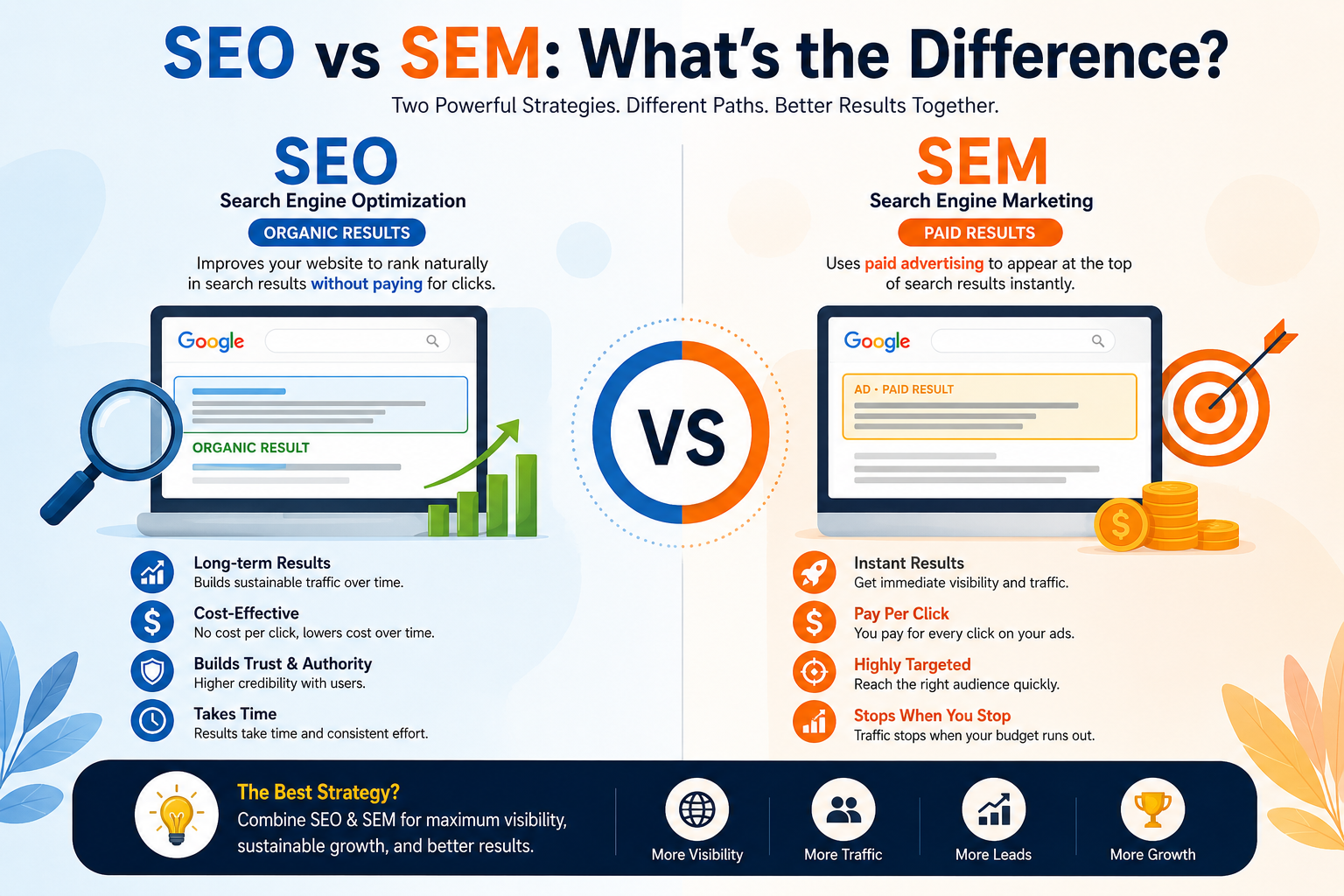
Lots of business owners have questions about SEO and SEM, but honestly, they can get mixed up pretty fast. Like, SEO sounds kinda similar to SEM, but it isnt. Both are strong digital marketing tactics that help brands show up on search engines such as Google, yet they usually do it in different ways entirely.
In 2026, search habits keep shifting, what with AI search results, voice search, local intent, and frankly, more competition online. Knowing the difference between SEO and SEM can make a business pick the right long term marketing path without wasting money.
If you’re aiming for more website visitors, local leads, and better online exposure, it helps a lot to understand how SEO and SEM can work together.
What Is SEO?
SEO means Search Engine Optimization.
SEO is about growing your website’s organic visibility in search results, without paying directly every time someone clicks.
The idea is to make your site rank naturally for the phrases customers are already typing in—so your business can be discovered through unpaid listings on Google.
Example phrases people may search:
- water damage repair Mississauga
- emergency flood cleanup
- commercial cleaning services
- mold removal company near me
When you earn those rankings, users land on your site from regular Google results, not ads.
What’s Included in SEO?
SEO covers several optimization areas, for example:
On-Page SEO
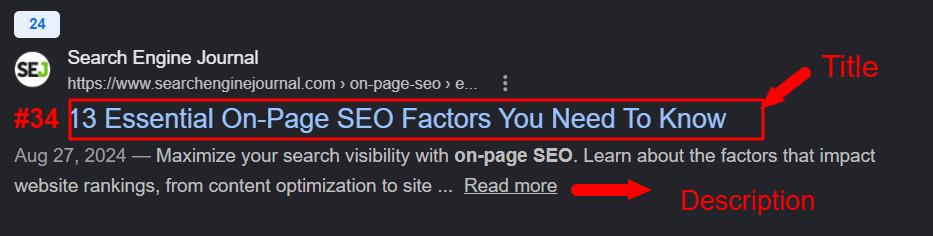
Working on:
- page titles
- meta descriptions
- headings
- keywords
- internal links
- image optimization
Technical SEO
Improving things like:
- website speed
- mobile friendliness
- crawlability
- indexing
- structured data, or schema
- Local SEO
Helping businesses appear in:
Google Maps
local search results
“near me” searches
For service businesses this is really huge.
Content Marketing
Producing:
blogs
FAQs
service pages
location pages
Good content supports rankings and helps build trust.
Link Building
Getting quality backlinks from credible websites, to raise authority over time.
What Is SEM?
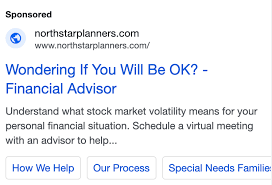
SEM means Search Engine Marketing.
SEM is most often referring to paid search ads, usually through Google Ads.
Here the business pays to show up at the top of results for specific keywords.
Example:
A company might bid on:
Those ads show up above the organic listings.
How SEM Works
SEM typically uses:
Pay-Per-Click, or PPC ads
keyword bidding
ad campaigns
audience targeting
conversion tracking
So the business only pays if someone actually clicks the ad.
SEO vs SEM: Main Differences
SEO SEM
Organic traffic Paid traffic
Long-term strategy Immediate visibility
No cost per click Pay per click
Takes time to rank Instant placement
Builds long-term authority Runs only while ads are active
Higher long-term ROI Faster short-term leads
Which Is Better for Businesses in 2026?
Most of the time the best option is combining SEO and SEM.
SEO is great for:
long-term growth
local rankings
authority building
steady traffic
lower marketing spend in the long run
SEM is great for:
quick leads
emergency services
seasonal promotions
very competitive keywords
fast visibility
Current SEO Trends in 2026
Search platforms are evolving quickly because of AI-driven answers and changing user behavior.
Here are the key SEO trends businesses should pay attention to right now:
1. AI Search Optimization
Google and other AI search engines may summarize answers right in the results.
So businesses need:
- useful content
- solid FAQs
- conversational keyword phrases
- clear topical authority
Content written only to chase keywords is getting harder to rank.
2. User Intent Matters More
Google now wants pages that truly solve what the person is trying to figure out.
So instead of keyword stuffing, answer things like:
pricing questions
process questions
urgent concerns
local service intent
3. EEAT Signals Are More Important
Google places more weight on:
Experience
Expertise
Authority
Trustworthiness
Businesses should add:
real company details
certifications
reviews
team photos
local trust signals
4. Local SEO Still Keeps Growing
“Near me” and city-based searches keep climbing.
Businesses should focus on:
Google Business Profile
local service pages
local FAQs
city specific content
5. Helpful Human Content Wins
Pure AI writing is becoming easier for Google to spot.
Content that tends to perform best includes:
real experience
natural language
practical examples
customer-first answers
Current SEM Trends in 2026
SEM is also changing fast, and a few themes show up repeatedly.
1. AI-Powered Google Ads
Google Ads is using more automation for:
bidding
targeting
ad optimization
conversion tracking
That means businesses need to improve quality landing pages and the overall conversion experience.
2. Higher PPC Costs
Some industries are seeing ad prices rise.
This is exactly why SEO becomes more valuable for long-term cost control.
3. Local Service Ads Are Growing
More local companies are using:
Google Local Service Ads
call-focused campaigns
mobile-first ad formats
These can be especially strong for emergency related services.
SEO vs SEM for Local Service Businesses
In categories like:
- restoration
- cleaning
- roofing
- plumbing
- HVAC
A combined approach usually works best.
SEO helps:
build long-term rankings
increase Google Maps visibility
create consistent traffic
SEM helps:
- generate quick calls
- reach urgent searchers
- drive leads faster
Should Small Businesses Focus on SEO or SEM First?
If the budget is tight, start with SEO.
Because SEO:
builds authority over time
gets compounding traffic as you rank
keeps bringing visitors even when ads aren’t running
Then add SEM later for:
faster lead generation
emergency campaigns
more competitive keywords
SEO and SEM are both valuable digital marketing strategies, but they do different jobs.
SEO supports long-term organic growth, while SEM brings quicker paid visibility and immediate traffic.
In 2026, businesses that combine:
- helpful SEO content
- strong local optimization
- trust-based branding
- smart paid advertising
seem to be getting the best overall results.